by John Crowley | Sep 17, 2026 | Uncategorized
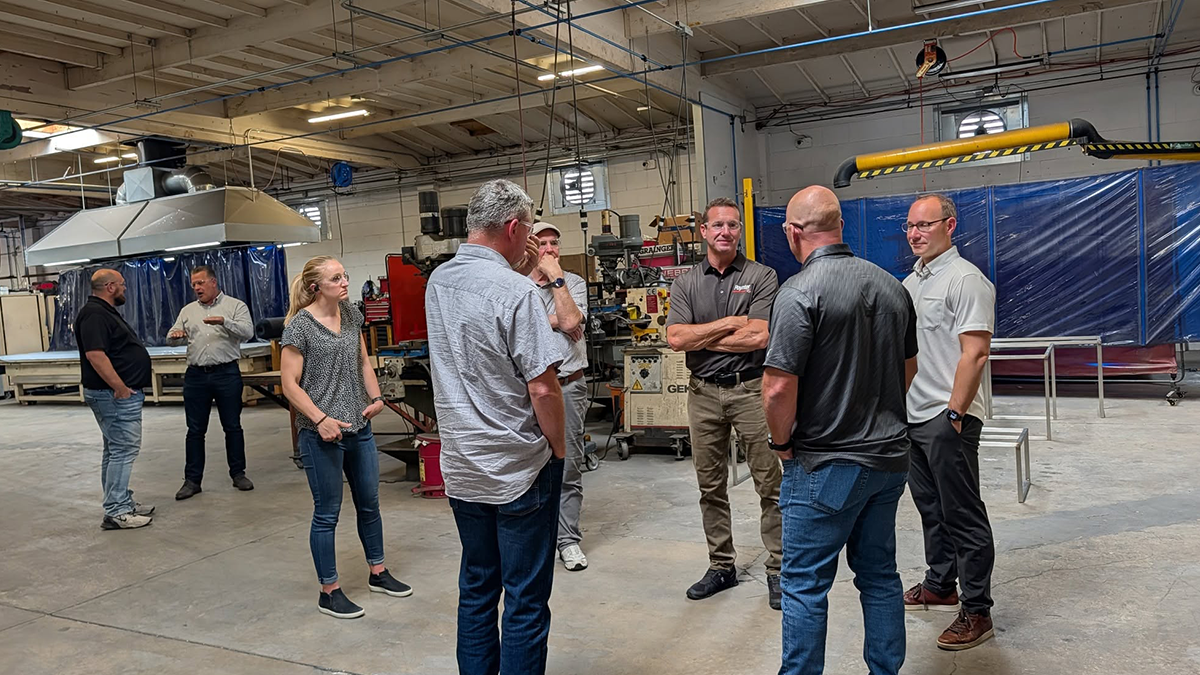
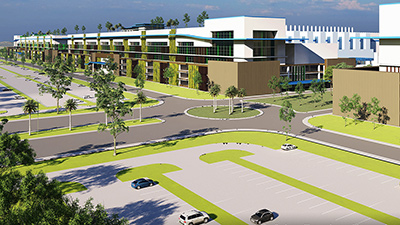
INDUSTRIAL: Inside the $100-Billion Micron Megafab Campus This year, Syracuse is the site of what may be one of the largest private construction projects in U.S. history — a semiconductor campus with no precedent in scale.In January, Micron Technology broke ground on its Clay, New York, megafab. The company has committed up to $100 billion over more than 20 years to construct four fabrication buildings, each spanning 2 million square feet with 600,000 square feet of cleanroom space inside. The U.S. Secretary of Labor called it “the largest construction project labor agreement in U.S. history.” For SMACNA contractors, the project represents both an opportunity and a logistical puzzle that has no playbook.“We are all gas and no brakes,” Micron’s Construction Executive Jeffrey Mainment told Earl Hall, Executive Director of the CNY Sheet Metal Contractors Association and the Construction Employers Association of Central New York, who negotiates building trades bargaining agreements for the project’s signatory employers. As of summer, Hall says, Micron sits four months ahead of schedule.A CHIPS and Science Act ProjectThe Clay campus exists because of the CHIPS and Science Act, the federal subsidy program designed to bring semiconductor manufacturing back onshore after decades of production migrating overseas. In April 2024, the Department of Commerce reached a preliminary agreement to provide up to $6.1 billion in direct CHIPS Act funding to support construction of two fabs in Clay along with a third fab in Boise, Idaho, unleashing $50 billion in private investment by 2030 as the first step toward Micron’s broader U.S. expansion plans. New York separately made up to $5.5 billion available through its Green CHIPS incentive program over the project’s life.The scale reflects supply chain strategy, as well as chip demand. He adds that Micron’s project labor agreement calls for up to five fabrication buildings, but the company’s draft environmental impact statement outlines plans for four, with Onondaga County securing additional land across the street to house Micron’s supply chain partners. The goal is to make it worthwhile for those partners to relocate their own operations to central New York rather than ship materials from elsewhere.The timeline has already shifted once. After nearly two years of schedule drift, environmental filings confirmed in late 2025 that construction of the first fabrication plant would begin in mid-2026, with the final Environmental Impact Statement revising the operating date for the first plant to 2030. Hall confirms that target: site work and preconstruction began in January, pile driving starts later this summer, and the goal is to pour foundations on the first 2-million-square-foot building by the fourth quarter of 2026.The Scope and the WaitFor sheet metal and HVAC contractors, the most important detail may be the timeline. Hall estimates sheet metal/HVAC work won’t begin until late 2027 or 2028 once the building shells are complete. During peak construction phases, up to 4,000 construction workers will be on-site simultaneously, according to public project documentation — a figure Hall corroborates.Bechtel was named construction manager for the building phase, meaning the bidding process for trade contractors, including HVAC and sheet metal scope, will likely run through a standard RFP process once the company is ready to release bidding documents. Hall says that probably won’t happen until mid-to-late 2027. The Real Challenge Is the WorkforceAsk Hall what worries him most about a project this size, and the answer is regional capacity.“A big challenge with these megaprojects is that we’ve got to make sure we have enough contractors and union labor available to service traditional customers of our signatory employers,” Hall says.To manage risk, SMACNA and the SMART union run a national program aimed at megaprojects and designed to import labor from other states without depleting the workforce available for the region’s existing customers. Hall says local business manager Michael Moran of Sheet Metal Workers Local 58 is closely tracking workforce timing and will have firmer projections by year’s end.A second challenge has already cost the project at least one bidder. Liquidated damages clauses — financial penalties triggered when a contractor misses a scope completion deadline — are standard in construction contracts, Hall says, but the severity of the penalty and the aggressiveness of the compressed schedule are what give contractors pause. “We’ve already seen at least one contractor of significant size say, ‘No thank you, I’m walking away from it,’” Hall says. With other construction work available in the region, he expects more contractors to walk if liquidated damages terms can’t be negotiated down to something manageable.A Project Without a BenchmarkMuch of what makes the Clay megafab difficult to plan around is its sheer novelty. The large firms brought in from Connecticut, Boston and New Jersey have built projects like this before, Hall says, but for central New York’s regional ecosystem, nothing compares. Micron is reportedly using a parallel facility under construction in Boise, Idaho, as a model for how to execute the work, but Hall says the lessons from that project are new even to Bechtel’s New York team.“It will disrupt the ecosystem here in central New York — make no mistake about that,” Hall says. “I just don’t know what that’s going to look like when we’re done.”What he is certain of is that the opportunities the project creates for the regional construction economy outweigh the disruption, provided contractors and labor partners stay nimble. Project owners, he predicts, will have to accept that major construction work costs and timelines are rising and that contractors will be more selective about which contractual terms they’re willing to accept.“The success of projects like Micron won’t be determined solely by engineering or financing — it will depend on the industry’s ability to move skilled labor where it’s needed while continuing to serve existing customers,” says Jason Watson, SMACNA Executive Director of Labor Relations. “It is a total team effort between labor and management. Successfully delivering projects of this scale requires close coordination, workforce planning and a shared commitment from everyone involved.”SMACNews will update members on the Micron megafab as sheet metal bidding opens and construction progresses.
by John Crowley | Sep 17, 2026 | Uncategorized
Capitol Hill Update: Housing Bill Could Speed HVAC Work If enacted, it could also create faster-moving opportunities for HVAC contractors by streamlining approvals, expanding retrofit work and supporting new construction.The bill cleared both chambers of Congress by wide margins in late June, signaling rare bipartisan agreement on an issue that affects millions of homeowners, renters, builders and trades professionals. Lawmakers have cast the measure as a major response to the nation’s housing shortage, with provisions aimed at lowering costs, increasing supply and reducing regulatory delays. For HVAC contractors, the most immediate impact may come from the bill’s emphasis on quicker project delivery. Section 206 would streamline emergency repairs or replacements of HVAC systems, hot water heaters and other essential utilities in HUD-assisted housing. By shifting those projects into exempt review categories, the bill could reduce environmental review delays and speed up both approvals and payment cycles.That matters in a market where urgency often collides with bureaucracy. Faster emergency repairs would likely mean more rapid turnover on federally supported housing work, while also opening the door to a steadier flow of service-related jobs.The bill also creates a pilot program for whole-home repairs that includes energy and water efficiency, resilience and weatherization improvements. While the language is broad, it could cover HVAC replacements, ductwork upgrades, ventilation improvements and heat pump installations. In practical terms, that means more retrofit work in aging housing stock and more demand for contractors who handle system modernization.“We are supportive of the bill and the long list of tax credits and grants to help homeowners retrofit and upgrade HVAC systems to drive down operating costs,” says Stan Kolbe, Executive Director of Government and Political Affairs for SMACNA.Another provision points to the industry’s growing role in connected building technologies. The bill establishes a temperature sensor pilot program for federally assisted housing, with funding for internet-capable devices that monitor indoor air temperature. That kind of policy push reflects the broader move toward remote monitoring, smart controls, and more data-driven building management.The strongest long-term effect, though, may come from the bill’s housing-supply agenda. It encourages more construction through zoning reform incentives, expanded eligibility for affordable housing development and support for converting vacant commercial buildings into residences. Each of those trends carries HVAC implications, from new equipment sales to complex retrofit design work.Converting offices, warehouses, hotels and other underused properties into housing typically requires new ventilation layouts, updated system sizing, and code-compliant upgrades. For contractors, those projects can be more technically demanding than new builds, but they also tend to create higher-value work.“We have been tracking this and certainly see it as a sign that Congress can work together to pass significant legislation,” says Brian Turmail, Vice President of Association and Industry Image, Associated General Contractors of America. “We hope this bill stimulates new demand for the multifamily construction many of our members build.”The legislation also aims to speed construction by reducing duplicative reviews and encouraging preapproved building designs. While those provisions do not target HVAC directly, they could shorten timelines across the board, allowing projects to move into installation and commissioning sooner.What doesn’t the bill include? The bill does not address the construction labor shortage and it does not create new HVAC-specific tax credits. It also avoids adding new mandates on heat pumps, electrification or refrigerants, which may help keep contractor compliance pressure from rising further in the near term.For now, the measure remains a notable example of bipartisan housing policy with potential ripple effects well beyond real estate. If it becomes law, HVAC contractors could see more retrofit opportunities, more multifamily work and a faster pace of projects tied to the nation’s push for more affordable housing.
by John Crowley | Sep 17, 2026 | Uncategorized
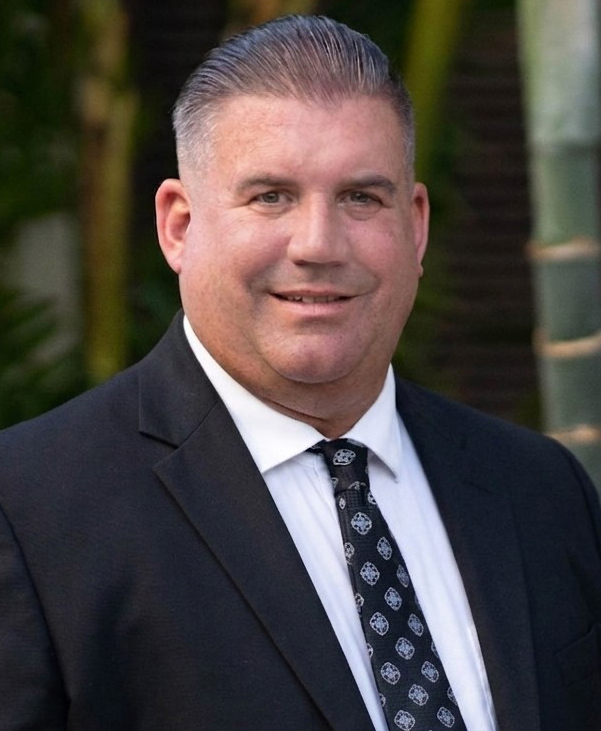
Eli Howard Named SMACNA COO In this role, Howard will continue leading SMACNA’s Technical Services Department, while collaborating across the organization to advance key initiatives, strengthen member services and support the association’s long-term strategic goals.Throughout the last 30 years, Eli has consistently demonstrated a member-first mentality that reflects the core values of our association,” says Frank Wall, SMACNA Chief Executive Officer. “His deep understanding of our industry, processes and commitment to our members has made him an invaluable part of the SMACNA team. Eli has played a significant role in building the trusted reputation of the SMACNA brand, and I am confident his leadership as Chief Operating Officer will help advance the association’s mission while continuing to strengthen the exceptional technical resources our members rely on.Howard has been with SMACNA for more than 30 years and oversees the development of SMACNA’s technical standards, manuals and guidelines for the HVAC, industrial, residential and architectural sheet metal industry.
by John Crowley | Sep 17, 2026 | Uncategorized
Adapt to Remain Competitive Many of us came from similar backgrounds, shared a similar approach to work, and even had similar stories about how we found our way into the trades.Fast forward to today, and our industry has changed dramatically. If you had told me back when I was working on the shop floor that one day we’d be talking about Artificial Intelligence helping us design, plan and execute sheet metal projects, I probably would have asked what science-fiction movie you’d been watching. But here we are.As our workforce continues to evolve, our industry has to evolve with it. We need to broaden where we look for talent and recognize that the best person for the job may not fit the traditional image of a sheet metal worker. That is not something we should resist, it’s something we should embrace.SMACNA and its members have already made tremendous progress, and we need to keep building that momentum. Technology is becoming an increasingly important part of how we operate, compete and grow. But technology alone isn’t the answer. We need talented people with new ideas, different perspectives and the skills to put those tools to work. Some may look back and wish the workforce still looked the way it did 20 or 30 years ago. I don’t. I’m proud that we are changing and evolving with the times. At Ventcon, we’ve had the opportunity to work on some incredible megaprojects. These are massive undertakings that require focus, ingenuity, creativity and teamwork to design, plan and execute. And if there is one thing those experiences have taught me, it’s this: our success comes down to our people.SMACNA and our industry as a whole is only as strong as the people who make it up. As you read this issue of SMACNews, you will meet some of the people who are helping move our industry forward and see the incredible work being done by the next generation of business leaders.The industry I entered as an apprentice all those years ago is not the same industry we see today, and I believe that is a good thing. If we continue to welcome new people, new ideas and new ways of doing things, there is no limit to where this industry can go.We have come a long way. And I believe our best years are still ahead of us.
by John Crowley | Sep 17, 2026 | Uncategorized
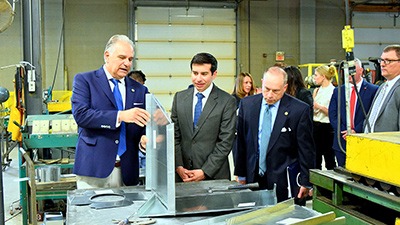
Sonderling Visit Shows the Trades a Path Forward Acting U.S. Labor Secretary Keith Sonderling’s June 10 visit to Luzerne County Community College (LCCC) in Nanticoke, Pennsylvania, offered a familiar but timely message for HVAC and sheet metal contractors: the trades still work, but the pipeline must start earlier, train smarter and keep people longer. At a roundtable inside the college’s Trades Building, workforce leaders, educators and SMACNA and SMART representatives talked about apprenticeships, technology, retention and the growing need to sell the trades as a modern, high-road career. Sonderling says the most important thing communities can do is make sure local workers get the first shot at the jobs being created close to home. “The most important thing we can do, especially in Pennsylvania communities like this, is make sure the local workforce has the first and best opportunity to fill these jobs,” he says, adding that community colleges are uniquely positioned to help students stay in their communities, learn a trade and build a family-sustaining career without taking on unnecessary debt. For contractors, that message landed squarely in familiar territory. The visit centered on PA Works, Pennsylvania’s statewide workforce strategy built around career and technical education, micro credentials and pre-apprenticeship programs. LCCC President John Yudichak says the state will need 300,000 skilled trade workers by 2030, and he cast community colleges as a critical partner in meeting that demand. Kelly O’Brien says the college is creating pathways that connect students, job seekers and employers, while Dr. Russ Bigus says LCCC’s training is designed to lead directly to employment and advancement. The roundtable also gave SMACNA and SMART leaders a chance to underline what is working in the field. Registered apprenticeships remain one of the industry’s most reliable workforce development tools, and early exposure through middle school, high school and pre-apprenticeship programs is increasingly seen as essential. The Heavy Metal Summer Experience was highlighted as a successful recruitment model, and veterans continue to represent a strong source of talent through programs such as Helmets to Hardhats and SMART Heroes. Participants also pointed to retention, mentorship and workplace culture as critical pieces of the workforce puzzle, especially as experienced workers retire and the industry loses hard-won institutional knowledge.Technology was another major theme. The modern sheet metal career, participants said, now includes 3D modeling, automation, digital fabrication and AI literacy, making the trade more technical than ever. Prefabrication and offsite manufacturing were also noted as expanding quickly because they can improve efficiency, quality and safety. The message to young workers was clear: this is still a hands-on industry, but it is no longer just about hand tools and sheet metal snips.The visit also highlighted a broader selling point contractors know well: the trades still offer a direct route to the middle class. John Weaver, an HVAC instructor at LCCC, told Sonderling that the field can provide a strong life for workers and their families. “It has provided all of us a great opportunity to provide very well for our families, and you’ll never be without a job,” Weaver says. “You can go anywhere in this country and find a job in any of these fields, and AI is not taking that away.” That line may end up being one of the most useful takeaways for contractors trying to recruit the next generation. The roundtable included Stan Kolbe, SMACNA’s Executive Director of Government and Political Affairs; Pete Jenkins, Executive Director at Sheet Metal Contractors Association of Philadelphia & Vicinity; Dominic Bonitatis, Owner of Prime Sheet Metal Inc.; Ernie J. Menold, President of Ernest D. Menold Inc.; and Jennifer Lohr, Vice President of Fisher Balancing Co. Their presence reinforced the practical tone of the discussion, which is that the future of HVAC and sheet metal depends not only on recruiting more people, but on giving them good reasons to stay, grow and lead.For contractors watching the labor market, the visit pointed to a simple conclusion. Apprenticeships still matter, community colleges still matter, and the trades still offer one of the clearest paths to a stable career, but the industry will need stronger partnerships, better messaging and a more modern training model to keep that promise alive.