 |
|
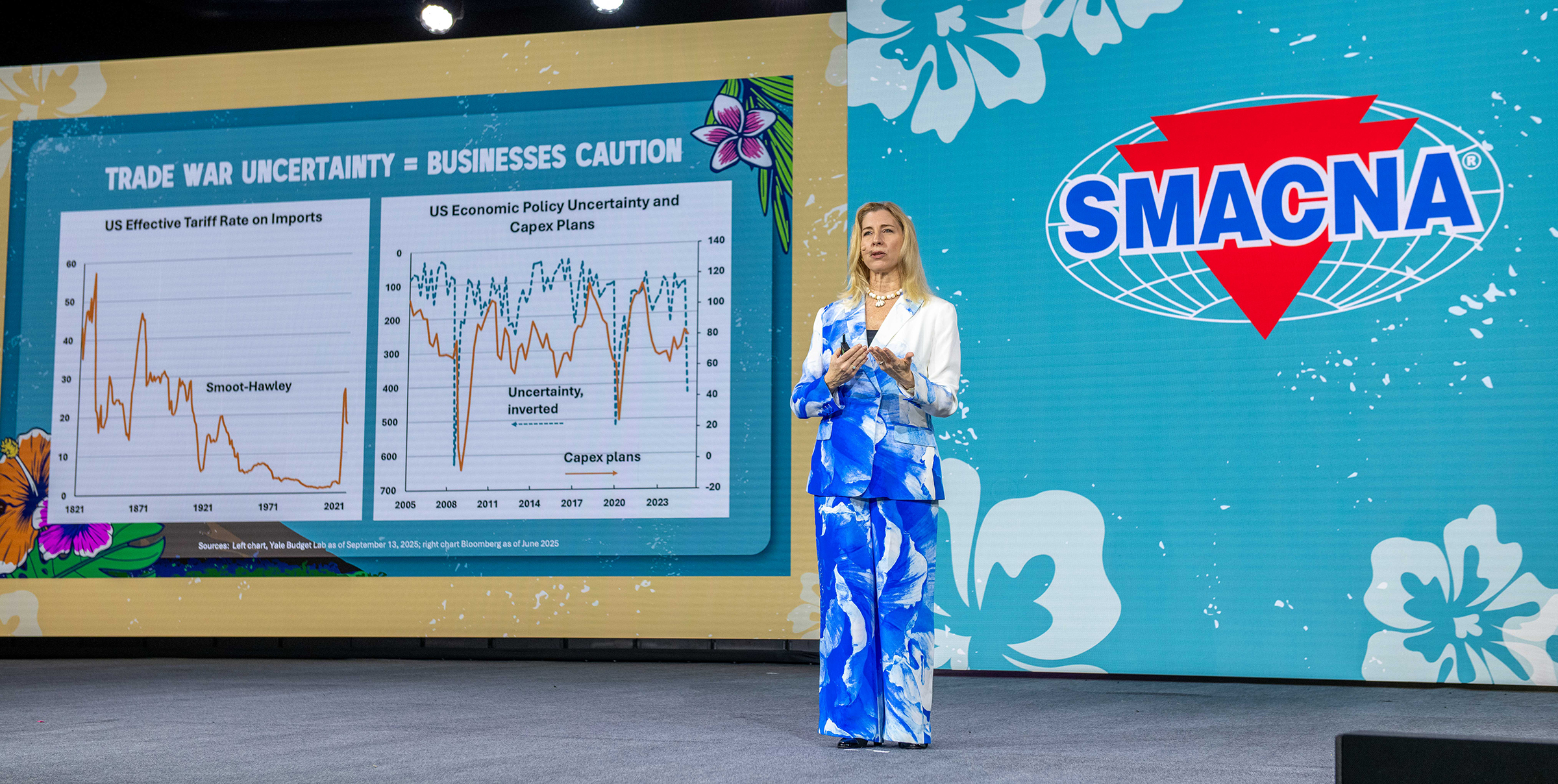
Rebecca Patterson talks about the economy, tariffs, and AI with the SMACNA Annual Convention audience. |
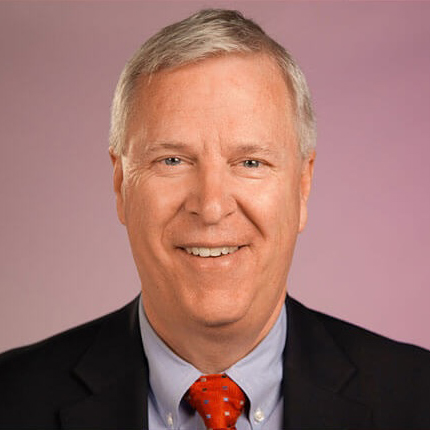
Rebecca Patterson, a globally recognized investor and macroeconomic researcher, took the SMACNA Annual Convention stage at a tipping point in economic history. This year, the challenges facing leaders in construction, procurement, and business are sharper than ever, driven by rising tariffs, shifting policy, and the accelerating march of artificial intelligence (AI).
Patterson, known for her tenure at Bridgewater Associates, Bessemer Trust, and JPMorgan, and for her inclusion on American Banker’s list of Most Powerful Women in Finance for six consecutive years, delivered candor and clarity to an audience eager for direction.
2025: A YEAR OF RISK AND RESILIENCE
“Tariffs and related policies like export controls and countervailing duties are clearly the big issue this year for supply chains,” Patterson says, underscoring both the uncertainty and inflationary pressures dogging businesses nationwide. “Prices will go higher — the question is not if, but exactly when and by how much.” Her words resonate at a time when procurement and supply chain leaders are grappling with confusion over exemption levels and political winds, with national economic emergency tariffs hanging in the balance.
When asked what keeps her up at night in 2025, Patterson is direct. “We have an uncomfortable number of questions that create risk for procurement leaders,” says the current member of the Council on Foreign Relations, the Economic Club of New York, and the Trilateral Commission. “What if America’s national economic emergency tariffs are deemed illegal? What countries are at risk of seeing tariff levels changed or delayed again?”
Given these unknowns, she advises leaders to “avoid where possible the ‘known risk areas’ — both specific goods and countries in the White House’s crosshairs — then stick to business as usual, purchasing what’s needed.”
THE DOUBLE-EDGEDSWORD OF AI
Current conversations in boardrooms are equally focused on the bottom line and on workforce disruption, Patterson shares.
“Given changing cost dynamics, companies are searching for efficiency gains and other ways to manage budgets. This increasingly includes using AI to reduce needed headcount,” she says.
She recently told Amazon’s Business Reshape audience that companies faced with rising input and AI-investment costs, along with economic uncertainty, are “planning to scale back headcount going into 2026.” In her words, “The bias is that more job cuts are coming. The offsets are personnel.”
LIVE DATA, MARKET MOVES AND UNCHARTED TERRAIN
Asked what indicators she watches closely, Patterson says, “labor-market data is top of mind. Fewer jobs would mean less spending, and that would flow through not just the U.S., but also the global economy.”
She also points to the risk of politicized central banks, warning, “If the Fed becomes politicized, you risk unanchored inflation expectations, which hurts confidence, markets, and consumers.”
Still, Patterson tries to balance realism with resourcefulness. “The best approach may be to try to avoid known risk areas, but stick to business as usual otherwise,” she advises.
If there’s one message she hopes leaders remember, it’s to pay attention, innovate, and never bet purely on yesterday’s playbook. At a “truly historic moment for the global economy,” as she calls it, that advice is more urgent than ever.