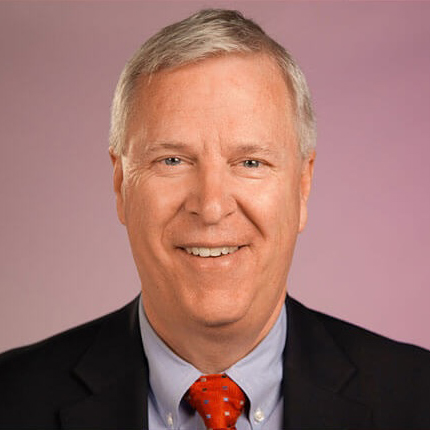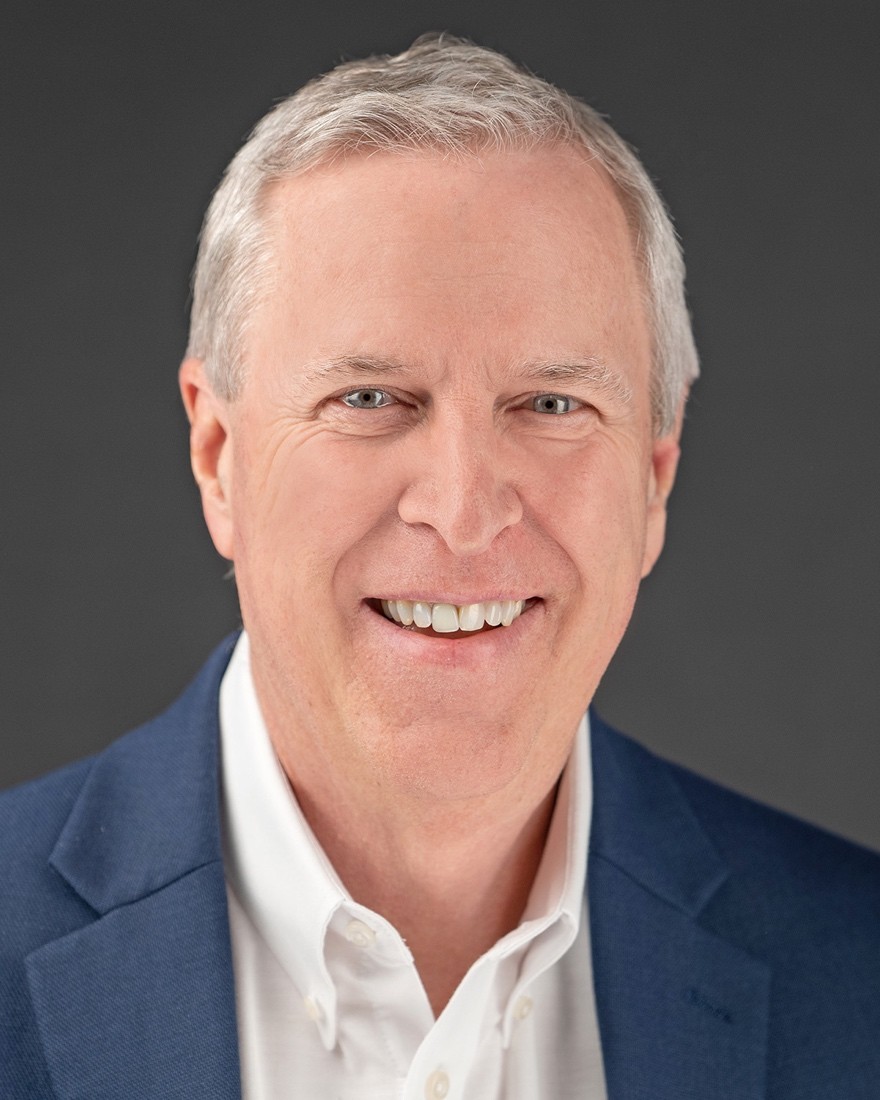
 When Congressman Ed Case sits down for a conversation at the Grand Wailea in Maui, it’s hard not to feel the contrast between the island’s serene beauty and the turbulent national issues he tackles daily. Case, who represents Hawaii’s 1st District and serves on the powerful House Appropriations Committee, has spent his career navigating the space where global strategy meets on-the-ground impact. And for SMACNA members, his message is clear: “you’re not just building facilities; you’re reinforcing America’s strength in a volatile geopolitical landscape.”
Case has been a longtime ally to SMACNA, returning year after year to connect with contractors who build and maintain the very infrastructure that keeps America secure.
for SMACNews, he unpacked the intersection of defense, construction, supply chains and governance at a moment he calls “deeply consequential.”
private sector, especially the skilled contractors who build, repair and sustain the infrastructure of the armed forces.
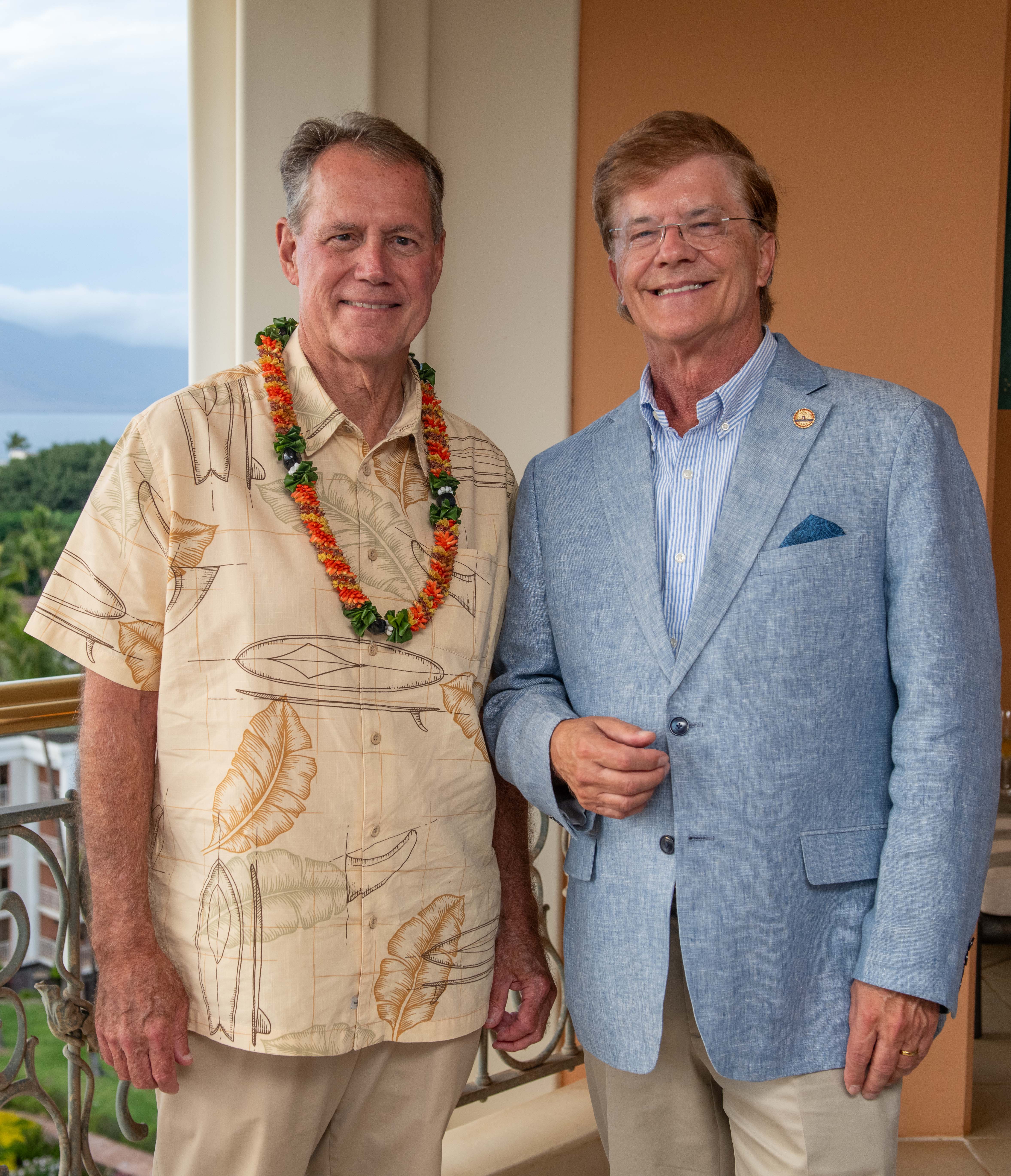
“Hawaii is the center of the Indo-Pacific,” Case explains. “Every single combatant command for the region is in my district. This is the front line of our country’s defense.”
That front line requires more than ships and submarines. It requires the places they live, train and maintain readiness, which makes up a sprawling network of facilities that SMACNA members help build.
As a former member of the Military Construction (MILCON) Subcommittee and now a senior member of the Defense Subcommittee, Case sees how essential high-quality construction is to deterrence.
“We completely rely on contractors for our national defense,” he points out. “If a project doesn’t work it’s not just a hassle; it’s a security risk.”
In Hawaii alone, billions are being invested right now, including the largest Navy project in its history: a world- class dry dock at Pearl Harbor. It’s infrastructure that will allow next-generation submarines and eventually larger ships to be repaired forward-deployed rather than traveling thousands of miles back to the mainland. That difference, he notes, could define readiness in a crisis.
For Case, the work happening in Hawaii is a microcosm of what SMACNA contractors deliver nationwide: a wide spectrum of industrial, commercial, residential and defense projects requiring deep expertise.
“You’re building everything, including residences, commercial structures, industrial sites and critically important military facilities,” he says. “That level of versatility and quality is not easy to find. But it’s essential.”
With more than 7,000 industrial workers at the Pearl Harbor Naval Shipyard and world-class contractors surrounding them, Case sees a model of what effective public-private partnership looks like when national security is on the line.
Case warns that political dysfunction threatens everything from paychecks to national security. When he spoke with SMACNews in late October, the federal government was in the middle of another shutdown. His assessment is blunt.
“The biggest challenge is the political dysfunction in our country,” he says. “We’re living in two parallel universes. When the mindset becomes ‘win it all or lose everything,’ governing becomes impossible.”
In Hawaii alone, a shutdown means 24,000 federal civilian workers and 48,000 active-duty service members going without pay. It jeopardizes procurement, contracts, planning and, ultimately, national security.
Case insists solutions exist and could be enacted “in one or two days,” but only with functional, bipartisan cooperation. “We’re better off solving our problems rather than chasing 100% wins that just kick the can down the road,” he says.
Few issues today affect contractors more than tariffs, and Case doesn’t mince words about their impact.
“I generally believe the world is better off with open, free trade,” he says.
Isolationism, he argues, has never produced long-term success for the U.S., but he acknowledges that there are legitimate reasons for targeted tariffs, such as national security concerns or countering abusive trade practices.
The problem, in his view, is the blanket tariff policy.
“Across-the-board tariffs punish our allies, raise costs for everyone and create massive uncertainty, especially for construction,” he warns.
For SMACNA members, that uncertainty hits bids, supply chains, costs and scheduling. It increases litigation and erodes predictability — critical components of construction planning.
And while the administration argues tariffs could revive American manufacturing, Case remains skeptical.
“It’s going to take far more than tariffs for industrial America to come back,” he says. “Trade policy needs nuance, not blunt instruments.”
Despite the political gridlock he describes, Case remains a pragmatic optimist. He’s committed to “problem solver” approaches and believes bipartisan partnership is still possible and necessary.
“We have huge challenges: economic prosperity, global relationships, preserving Social Security and protecting our environment,” he says. “All of them are solvable if we face them together.”