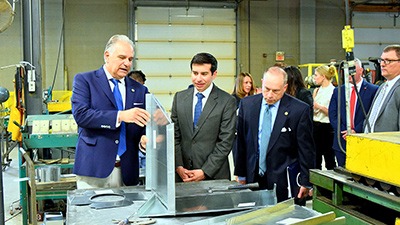
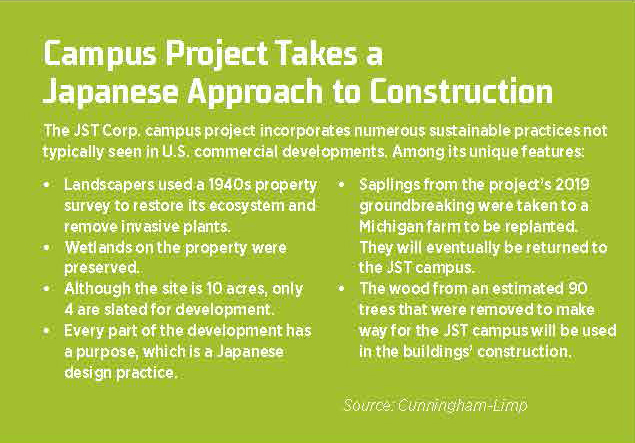
Sustainable. Eco-friendly. Green. The Farmington Hills, Michigan, campus of Japan Solderless Terminals (JST) Corp. was designed to go beyond typical labels. The 10-acre, six-building property takes in its surroundings in a way unlike most corporate campuses.
Instead of replacing native vegetation with grass, it preserves and expands the plants. As opposed to buildings that feature huge glass panes, JST’s structures make extensive use of natural materials like wood and stone. Drywall is forbidden. Paint is banished. And synthetic, commercial carpeting is nowhere to be found.
It’s not what you might expect for a multinational manufacturer of electrical connectors used in industries such as automotive and HVAC. But it’s keeping in line with Osaka, Japan-based JST’s Asian approach to design, which aims to create spaces in harmony with the environment and that respect nature.
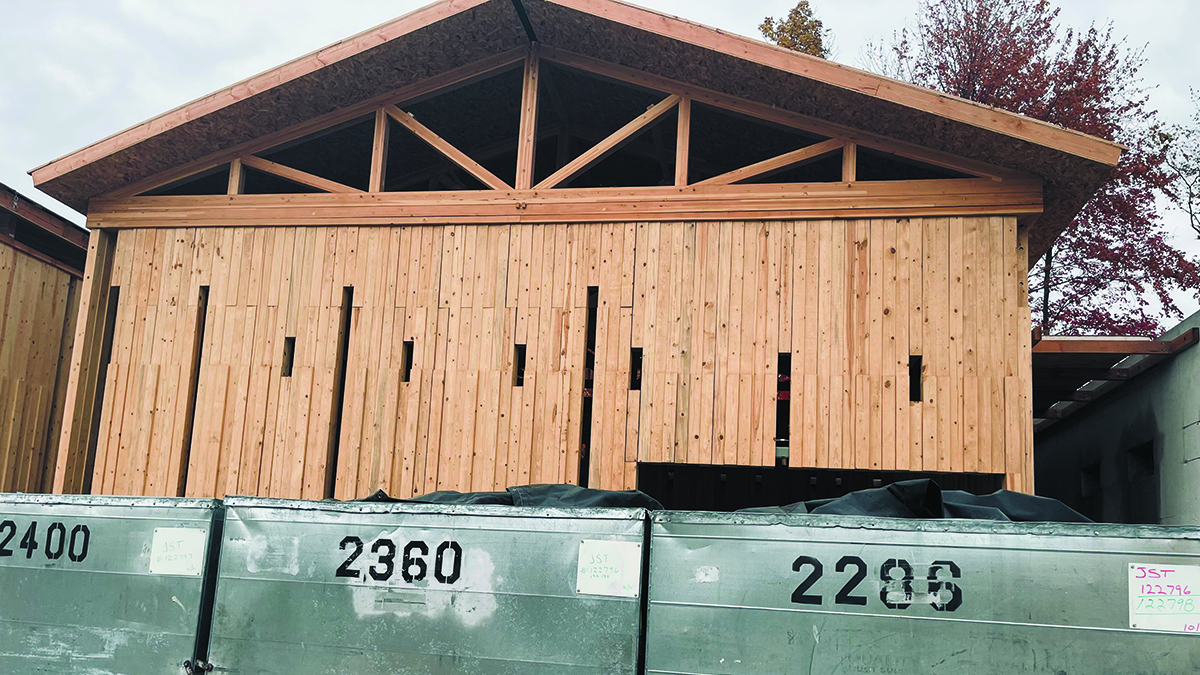
Cunningham-Limp, the project’s Construction Manager, calls it “the most holistically sustainable project ever seen in Michigan.” When completed, the JST campus will encompass six buildings: a test lab, sales center, engineering center, annex, center circle loop, and a “tree nest.” The buildings will not disrupt the animals or natural habitats of the heavily wooded site, which sits in the heart of metropolitan Detroit.
DEE CRAMER AWARDED PROJECT
Cunningham-Limp awarded SMACNA member Dee Cramer of Holly, Michigan, a $3-million contract in 2021 to handle HVAC construction for this holistic sustainable building, including duct fabrication and installation, at the campus test lab. The lab, which is an evaluation site for the critical electronic components that JST manufactures, was the first campus building that was erected.
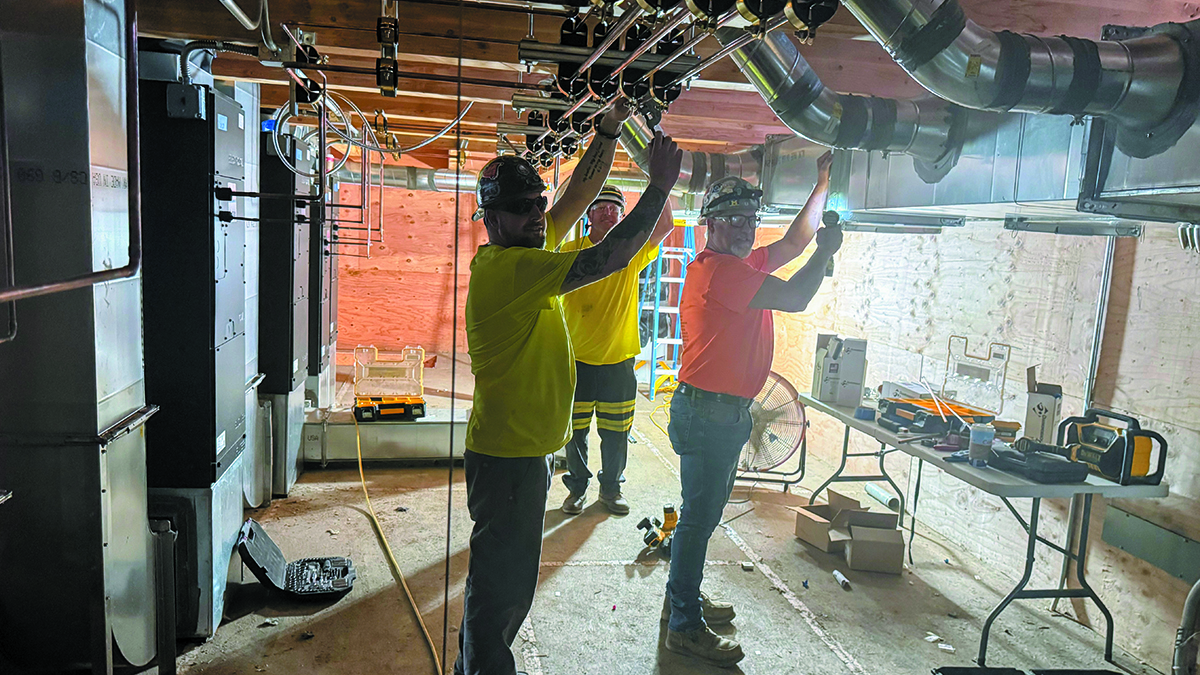
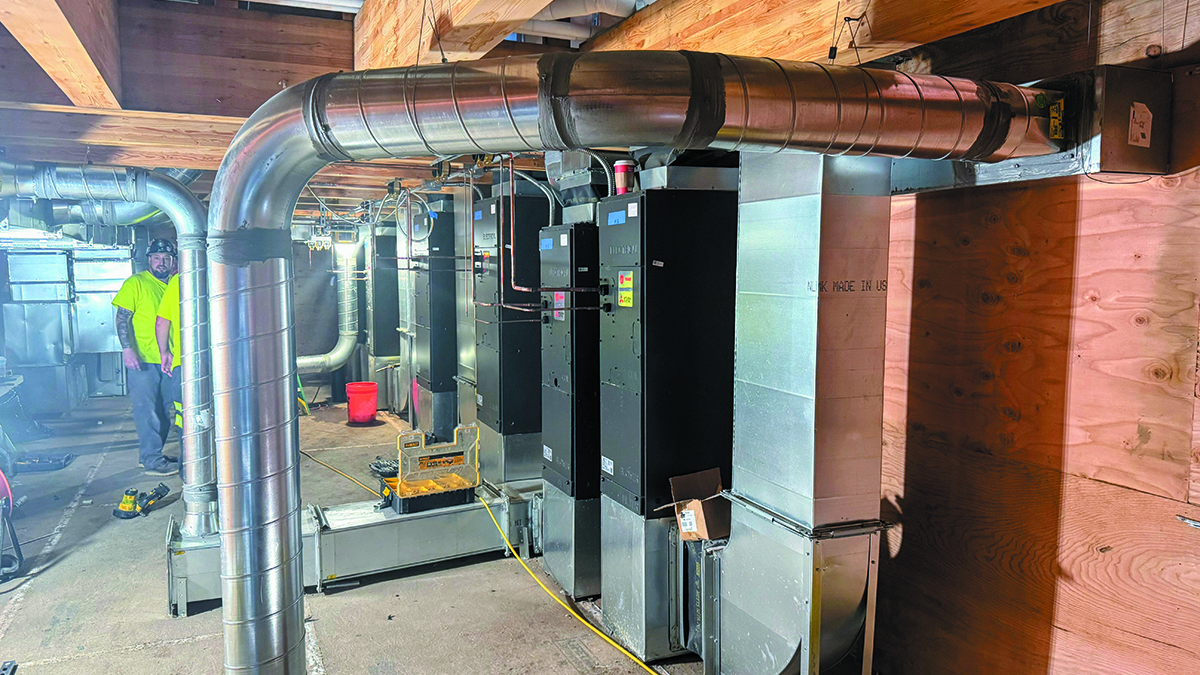
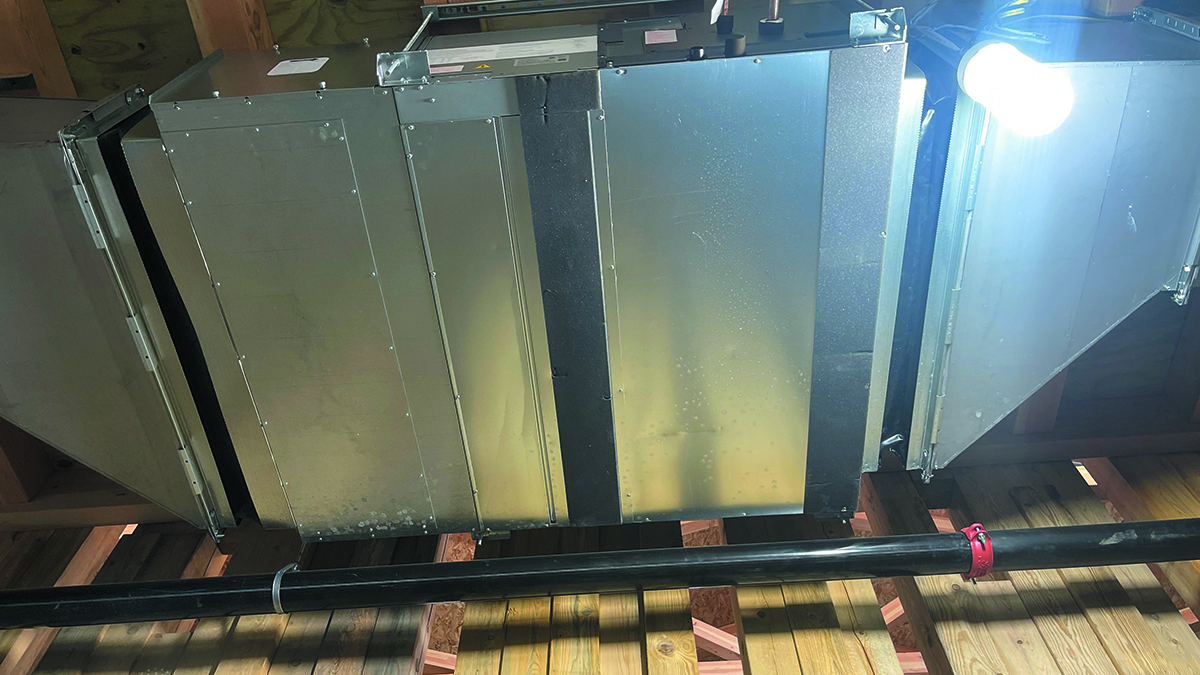
Aaron Montgomery, Dee Cramer Project Manager, explained that his company’s work began where the geothermal system tied into the piping (installed by a subcontractor) and the HVAC system. The piping entering the lab connects to 30 ducted fan coil units and numerous branch boxes that help condition the lab’s corridors. “Piping goes into four condensers and then numerous heat exchangers,” Montgomery says. “There’s also dedicated outdoor air systems (DOAS) — three of them just in the test lab alone.”
The test lab used approximately 23,000 pounds of internally lined duct, all of which was fabricated at Dee Cramer’s Wixom, Michigan, facility, about 11 miles from the jobsite. Most of the ductwork was rectangular, with some spiral.
AN EDUCATIONAL EXPERIENCE
JST’s commitment to sustainable construction presented a learning curve for Dee Cramer and some of the other contractors involved. “It was a bit of a struggle on everybody’s end because it’s a timber-frame building,” Montgomery says. “There’s not much timber-frame construction and carpentry experience here in the local Detroit area. It was such a trying process sometimes.”
Nick Seraphinoff, the Vice President of Project Management at Dee Cramer, says the use of timber-frame construction made the project more complicated. “It affected the types of fasteners and hangers that we could use, as well as the coordination with other trades,” he says.
 The lab was completed in 2023. Officials with Cunningham-Limp and JST were pleased with Dee Cramer’s work. The contractor was hired to perform the HVAC work on four other campus buildings, bringing the total contracts to around $7 million in value. Dee Cramer’s work on the sales building is now underway.