by John Crowley | Apr 30, 2025 | Uncategorized
The Future of
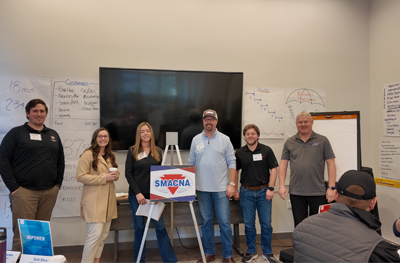
HVACR Innovation Unfolds in Orlando The 2025 AHR Expo took Orlando, Florida, by storm from February 10–12, uniting more than 50,000 heating, ventilation, air conditioning and refrigeration (HVACR) professionals from around the globe for an experience in learning, networking and exploring the latest technology advancements. As an event for industry leaders, manufacturers, contractors and innovators, the AHR Expo once again proved to be the go-to destination for discovering emerging trends and cutting-edge solutions.A Legacy of InnovationSince its inception in 1930, the AHR Expo has served as an industry marketplace for businesses to showcase their latest products and technologies. Co-sponsored by ASHRAE and AHRI, the event has grown into a global phenomenon, attracting a diverse audience eager to exchange ideas and drive the future of HVACR.“This show is more than just an exhibition; it’s a place where the industry comes together to discuss challenges, explore new opportunities and pave the way for what’s next,” says Show Manager Mark Stevens. “With major shifts in business, regulation and technology, professionals are eager to meet face-to-face and stay ahead of the curve.”Left: The SMACNA team poses with SMACNA President Tom Martin and Ben Cooley from T.H. Martin, based in Cleveland, Ohio, in the SMACNA booth. Top Right and Bottom Right: The AHR Expo featured more than 1,800 exhibitors. Highlights from the 2025 AHR ExpoThis year’s event featured more than 1,800 exhibitors, 350 speakers and more than 50,000 attendees. Key highlights included:Innovative Exhibits: Industry leaders showcased products and emerging technologies across 516,060 square feet of exhibit space.Speaker Sessions: Experts shared insights on pressing industry topics, from refrigerant transitions to AI-driven HVAC solutions.Networking Opportunities: Attendees connected with industry peers, formed partnerships and gained valuable business insights.Educational Sessions: Free courses covered critical topics like flammable refrigerants, tax credits and state-of-the-art HVACR practices.The Power of ConnectionThe AHR Expo was more than just a trade show; it was a hub for fostering relationships and opening doors to new possibilities. With dedicated networking events, a bustling exhibition floor and the Podcast Pavilion featuring 22 live recordings with industry experts, professionals had opportunities to engage and learn.Top: The AHR Expo was held at the Orange County Convention Center in Orlando, Florida. Bottom Left: SMACNA team members present a session on “HVAC Duct Construction – Large Ductwork.” Bottom Right: The AHR Expo drew 50,000 heating, ventilation, air conditioning and refrigeration professionals.“The expansion of networking opportunities has been tremendous,” says Nicole Bush, Director of Marketing at AHR Expo. “In-person events like this one help build meaningful industry connections and strengthen collaboration between manufacturers and field professionals.”Shaping the Industry’s FutureWith more than 300 educational sessions and a robust lineup of expert panels, attendees had access to in-depth discussions on pressing topics such as tariffs, workforce development, AI integration and cybersecurity in HVACR systems.“The growth of our education program reflects the demand for industry-specific insights,” says Kimberley Pires, Special Projects Manager. International Exposition Co. “These sessions bridge the gap between discussion and real-world application, ensuring attendees leave with actionable knowledge.”A major highlight of the event was the 2025 State of the Industry Panel, featuring prominent leaders such as ASHRAE President Dennis Knight, AHRI CEO Stephen Yurek, HARDI CEO Talbot Gee and National Comfort Institute President & CEO Dominick Guarino. Moderated by Bryan Orr of HVAC School, the panel dove into upcoming industry shifts and market trends. Part of the discussion touched on workforce issues. “Over the next 25 years, there will just be tremendous opportunity for our industry,” Knight says. “Global population projections predict that we will be building a new New York or Chicago every month just to keep up.”HVACR systems are expected to triple worldwide over that time. “That’s a lot of retrofits and replacement work,” he adds. “And as our workforce ages, this industry will need to attract and retain new talent on an unprecedented scale.”“Since COVID-19, we have seen greater interest in the trades,” Gee adds. “Our industry now needs to embrace that. We need to be infectious, tireless recruiting machines.”Recognizing Excellence: 2025 Product of the YearInnovation took center stage at the AHR Expo, and this year’s Product of the Year award went to PassiveLogic for its Sense Nano, a wireless sensor that eliminates battery replacements by drawing energy from its surroundings. This technology sets a new standard in HVACR efficiency and sustainability.Looking Ahead: AHR Expo 2026 in Las VegasThe 2026 AHR Expo heads west to Las Vegas from Feb. 2–4 for another gathering of HVACR industry leaders.
by John Crowley | Apr 30, 2025 | Uncategorized
SMACNA Releases Major Updates to Seismic Restraint and Industrial Duct Construction Manuals SMACNA has released significant updates to two of its key industry manuals: the Seismic Restraint Manual: Guidelines for Mechanical Systems, 4th Edition and the Rectangular Industrial Duct Construction Standards, 3rd Edition (2024). These updates incorporate the latest building codes, expanded design options, and new engineering data to improve safety, efficiency and usability for contractors, engineers and industry professionals.The Seismic Restraint Manual introduces an extended list of bracing options, additional material thickness selections and refined anchor system guidelines to meet varying seismic risk levels. Meanwhile, the Rectangular Industrial Duct Construction Standards now feature enhanced pressure capacity tables, additional duct construction options and expanded temperature design capabilities for stainless steel ducts.With these revisions, SMACNA continues its commitment to providing the industry with the most up-to-date standards, ensuring compliance, durability and improved structural performance. Here are the update details:SMACNA® Seismic Restraint Manual: Guidelines for Mechanical Systems, 4th EditionThe manual explains how very low- and very high-risk areas of the country can be accommodated. The new edition includes a more extensive list of bracing options and has been revised to comply with current building codes, all within a single document for user convenience.SMACNA® Rectangular industrial duct construction Standards, 3rd edition — 2024The 1980 edition of the SMACNA® Rectangular Industrial Duct Construction was the first publication to address the selection of duct gauge and reinforcement for rectangular industrial duct systems. The 2004 Second Edition was updated to include a more “user-friendly” version of the original publication.For this Third Edition, the SMACNA® Rectangular Industrial Duct Construction Task Force conducted a comprehensive review and update of the Second Edition.
by John Crowley | Apr 30, 2025 | Uncategorized
SMACNA Launches
New Website:
A Game-Changer for Contractors Finding essential industry resources shouldn’t feel like searching for a needle in a haystack. Yet for years, that was the reality for contractors navigating SMACNA’s old website. A clunky search function, scattered navigation and overwhelming amounts of content made it frustrating — even for staff — to track down critical materials like Technical Standards, training courses and legislative updates.That’s why SMACNA took action, embarking on a major website overhaul to create a smarter, more intuitive digital hub for its members. The result? A sleek, streamlined website that doesn’t just look good; it works hard to support contractors in their day-to-day operations when they are looking for resources and support.SMACNA members are incredibly busy running projects, managing teams and staying ahead of industry changes,” says Susannah Forde, Executive Director of Marketing and Communications for SMACNA. “They don’t have time to waste digging through a confusing website. We built this new platform to make sure they can find what they need quickly and efficiently.”Built for the Way Contractors WorkOne of the biggest improvements? Navigation that makes sense. Gone are vague categories like “Learn” and “Be Informed.” Instead, core sections — Technical Standards, Education & Events, Business Resources and Government Affairs — are front and center, ensuring members can access critical information with just a few clicks.The Resource Center is another game-changer, offering a one-stop shop for training, guides and industry articles — all neatly organized by topic. Plus, the site’s enhanced search function delivers faster, more accurate results, highlighting popular search terms and featured answers for quick access to key insights.A Site That Tells the Industry’s StoryBeyond functionality, the website redesign also amplifies the voices of SMACNA members. The new “About the Industry” section introduces the world to the vital work of sheet metal and HVAC contractors, showcasing their projects, innovations and contributions to the communities they serve.“SMACNA members are leaders in construction technology, sustainability and workforce development,” says Aaron Hilger, CEO of SMACNA. “This new website doesn’t just serve our members; it elevates their work and highlights their impacts on the industry.”Smarter Behind the ScenesIt’s not just the front-end experience that got a major upgrade. The new content management system ensures SMACNA staff can easily update the site, keeping content fresh, relevant and accessible. That means members will always know what’s new, what’s trending and what’s ahead for the industry.At its core, this website redesign isn’t just about aesthetics. It’s about delivering real value to SMACNA contractors. A well-designed website should work as hard as the industry professionals who rely on it, and with this transformation, SMACNA is proving that digital tools can be just as powerful as the hands that build America’s infrastructure.The new site went live in February, marking the beginning of a more connected, efficient and informed SMACNA community.
by John Crowley | Apr 30, 2025 | Uncategorized
A Hub for Cutting-Edge Technology & Collaboration The 2025 MEP Innovation Conference in Los Angeles delivered a dynamic and forward-thinking event, bringing together more than 700 leaders from the mechanical, electrical and sheet metal trades. Over the course of four days, industry professionals explored the latest technological advancements, shared insights on emerging trends and connected with peers from across the country.The 17,000-square-foot facility of Sheet Metal JATC Local 105 showcases the latest in sheet metal fabrication and HVAC system installation. One of the standout moments of the conference was the exclusive tour of the Sheet Metal JATC Local 105 training facility, where attendees witnessed firsthand how modern apprenticeships are blending cutting-edge technology with traditional craftsmanship. The 17,000-square-foot space showcased the latest in sheet metal fabrication, HVAC system installation, and smart building integration. For many, it was an eye-opening look at the future of skilled labor training.Top Left: SMACNA Past President Angie Simon talks with Jason Watson, Executive Director of Labor Relations at SMACNA.. Top Right and Bottom: MEP Innovation Conference attendees tour the Sheet Metal JATC Local 105 training facility.Inside the Future of Skilled TradesDuring the tour, visitors engaged with instructors and apprentices who demonstrated the facility’s state-of-the-art equipment, including automated plasma cutters, 3D modeling software and augmented reality training modules. The integration of digital tools into the hands-on learning environment underscored how apprentices today are mastering both theoretical knowledge and practical application.Attendees marveled at the way Local 105 is preparing the next generation of sheet metal workers to navigate an industry increasingly shaped by automation and AI. They were impressed to see how much technology has been incorporated into traditional trades. Blending hands-on skills with digital fluency is shaping the industry’s future.An Evolving Conference for an Evolving IndustrySince its redevelopment in 2022 by the National Electrical Contractors Association (NECA), the Sheet Metal and Air Conditioning Contractors’ National Association (SMACNA) and the Mechanical Contractors Association of America (MCAA), the MEP Innovation Conference has grown into one of the premier events for construction technology and innovation.With a robust agenda spanning AI applications in construction, advanced project management tools and cutting-edge fabrication techniques, the 2025 conference highlighted the rapid evolution of the industry. “You see the levels at which people are engaging now,” says Stephen L. Rose, Director of Technical Innovation and Facilities at the Electrical Training Institute of Southern California. “It’s no longer just project managers and tech specialists — company presidents are here, learning about AI and how to integrate it into their businesses.”Left: At the Sheet Metal JATC Local 105 training facility, attendees witnessed how modern apprenticeships are blending cutting-edge technology with traditional craftsmanship. Top Right: Scott Sheppard, The Bowers Group, Beltsville, Maryland, points to a SMART chart showing labeling guidelines on a typical HVAC system.Bottom Right: Facility tour attendees listen to a presentation. Many of the presentations demonstrated the facility’s state-of-the-art equipment, including 3D modeling software, automated plasma cutters and reality training modules.A new feature this year was the Sponsored Demonstration Rooms, where attendees could interact directly with the latest technologies showcased on the trade show floor. “Oh my gosh — tech, tech, tech and more tech,” Rose says. “Once upon a time, you’d come to a conference like this and see rows of hand tools. Now, you see AI-driven software, automation tools and cloud-based project management systems taking center stage.”Innovation in Action: The 2025 MEP Innovator of the YearThe conference also celebrated groundbreaking contributions to the industry with the MEP Innovator of the Year award. This year’s recipient, Collin Weiner, President of CalEnergy Corporation, was recognized for his leadership in integrating fault-managed power, advanced lighting controls and smart building systems. Weiner has been at the forefront of using data-driven strategies and cutting-edge materials to push the industry forward.A Commitment to CommunityIn addition to showcasing technology and innovation, the conference emphasized giving back. With the event coinciding with the containment of the devastating Los Angeles wildfires, NECA, MCAA, SMACNA and the New Horizons Foundation pledged up to $60,000 for disaster relief efforts. Attendees were encouraged to contribute, pushing the final donation total even higherLooking Ahead to 2026As the 2025 MEP Innovation Conference ended, one thing was clear: The future of mechanical, electrical and sheet metal contracting is evolving at a rapid pace. Those who embrace change, invest in new technologies and foster industry collaboration will lead the way forward.The 2026 MEP Innovation Conference is set to take place in Austin, Texas, from January 26–28. Stay tuned for registration details and another opportunity to be at the forefront of industry transformation.
by John Crowley | Apr 30, 2025 | Uncategorized
Navigating Uncertainty:
A Call for Caution and Collaboration
Amid Political and Economic Shifts Its origin is less clear. Perhaps a group of British Diplomats in China and later politicians in England started it. Kennedy used it in a speech in 1966 at the University of Cape Town in South Africa titled the “Day of Affirmation Address.” He was talking about unrest and the ongoing civil rights movement — a positive message. He was also focused on the importance of youth involvement in society and politics and the danger and unrest that come from attempts to change. To me, the phrase has always been about opportunity and risk. We are indeed experiencing something “interesting” with our political leadership. This affects all SMACNA members, regardless of country. It also affects our partners at SMART, and at the national level, we are dedicated to working together to mitigate the challenges. We are all in this together.Lately, I see a lot more risk than opportunity. As the son and grandson of a small businessman, I strongly believe in limited government and the importance of individual effort for success. That translates to being broadly sympathetic to the efforts to shrink the size of government and limit the excess spending that inevitably comes from the “worst system of government, except for all the rest” (thank you, Winston, for your wisdom). It does not lead to supporting an effort that is made up of kids wildly swinging machetes around to cut agencies and staff. The lack of thoughtfulness is astounding. Government has critical roles in many areas, and care must be taken to avoid chopping off essential limbs. The entire tariff discussion focuses my attention on the risks for our members and the world economy. Targeted tariffs that address specific problems are a valuable tool in international relations. They can help create level playing fields for industries, induce fair competition and serve wider geopolitical ends. Broad tariffs, such that we may be subject to in an attempt to solve imagined problems created by trade imbalances, imagined unfairness or internal budget problems, are simply silly. The Trump administration is doing everything it can to destroy the economy, kill jobs and force a realignment of world trade. Unfortunately, we are the front-line casualties of that effort. A realignment in global trade has been coming since the USSR fell. It was only a matter of time before isolationist elements in the Republican and Democratic parties would start pushing to end the post-World War II security guarantee the United States provided to global commerce. The clock on that spending began when the big enemy was vanquished. The post-WWII system relied on secure shipping. The world economy is built on the notion that we can move goods freely globally. America sacrificed some of the success that it could have had to raise the tide for the world. It worked amazingly well, ushering in the greatest prosperity that humanity has experienced. Many books have been written on this topic, and more will be published. I am old enough to have lived through the fall of the Berlin Wall and the “velvet” revolutions in Eastern Europe — and to feel how meaningful those changes were. At the time, I did not predict the end of this global commerce as we know it. Gen X may be one of the generations that live at the beginning and the end of a world order. For associations, our task is to anticipate the political winds, react affirmatively to the unexpected and chart the best outcome for our members. SMACNA’s legal and government relations teams have worked tirelessly to guide members. We have spent countless hours with members of Congress and the administration — and will continue to do so. For the last few weeks, I have sent chapters a tariff update to inform them what we have learned. The theme of those updates could be something like “the truth right now, subject to immediate change at any time!” I am writing this article on March 27. The story will change at least five times before April 2, when many tariffs are supposed to take effect. It will change again and again after that. The real-world impacts of the words coming out of the Trump administration will hurt. Metal prices have risen, and so have the costs of equipment. Vehicles are already more expensive in anticipation of tariffs. Projects are being canceled or pushed back. Members report layoffs due to the uncertainty and owner pullbacks. We are still having a good year, but that could change if this continues. We will do everything that we can to limit the effects. It is also important to remember that nothing is permanent, and damage done today can be repaired in the future. Please share your stories as we continue to navigate this very uncertain world. The documents about price increases, project issues and schedule changes have helped SMACNA explain to officials how tariffs and continuous changes impact our members & workers. When a significant change happens, the individual story often makes a difference. You can also support our work by becoming a PAC supporter. If you have not already done so, please go to SMACNA’s website and sign a prior authorization form. That will allow us to communicate more about politics and give you opportunities to engage with the Administration and Members of Congress. SMACNA has a very active schedule of events. Our next Fab Forum at McCusker-Gill is sold out in early April. Education programs like Business Management University and Project Managers Institute continue to sell out. The tech department is hosting many technical university programs. For something to look forward to, Convention Registration opens on April 24 at noon. Register early; we will sell out in Maui. I’m looking forward to a great line-up of education sessions and keynote speakers. See you there, if not before! Aaron Hilger is CEO of SMACNA, bringing more than two decades of executive association leadership to this role. Hilger is focused on building a stronger, more competitive environment for all SMACNA contractors.
by John Crowley | Apr 30, 2025 | Uncategorized
Architectural: Working in the Red Zone Running out the clock wasn’t an option when SMACNA member Liberty Sheet Metal won a bid to put new architectural panels on a Detroit hotel.SMACNA contractor Liberty Sheet Metal made and installed architectural panels for a Detroit hotel hosting the 2024 NFL draft. The downtown Courtyard Marriott would be packed with guests in town for the 2024 NFL draft. Liberty workers would have just weeks — without timeouts or delays — to fabricate and install panels for the hotel’s front entrance. The new facade was part of a $9.5 million renovation of the 260-room property. At Liberty Sheet Metal’s shop, ACM Fabricator Cheyn Dixon assembles a panel like those used in the Courtyard Detroit Marriott project. The draft was one of the biggest events to hit the Motor City in recent memory. It wasn’t just an announcement of players and teams for the upcoming season. It was a multi-day celebration of America’s favorite sport, with interactive exhibits, free concerts and the chance to get player autographs and see the famous Vince Lombardi Trophy. Hundreds of thousands of fans from across the country were expected to attend the 2024 draft. Higley Construction, the project’s Ohio-based general contractor, awarded Liberty the $250,000 contract in December 2023. The draft was taking place April 25-27, 2024. But because the hotel entrance had to be rebuilt before the panels could be installed, Liberty couldn’t start putting them in place until March. That gave the company only a few weeks to complete its work. A 100% Architectural CompanyBased in a rural part of southeastern Michigan, Liberty Sheet Metal is a 100% architectural contractor that’s been in business more than 25 years. It specializes in aluminum composite panels; metal walls, siding and roofing; and custom architectural designs. Its project list includes a nearby high school, apartment complexes, the University of Michigan and a major Mercedes-Benz research facility. Justin Becker, Liberty’s Director of Estimating and Project Management, says the short time frame, plus the high profile of the NFL draft, made it different. “This was an interesting project,” Becker says. “We were selected because of our knowledge and our experience. We definitely had a budget that we had to maintain, but they were most concerned about scheduling and timing and the unique materials on the facade.”The hotel’s new entrance features about 2,000 square feet of panels from manufacturers such as Longboard, Reynobond and Knight Wall. They’re made from 0.125-inch aluminum and 4 mm composite aluminum, finished in colors such as black and Light National Walnut. The entrance has warm tones of wood that contrast with silver metal highlights. Fabrication work took place at Liberty’s 40,000-square-foot sheet metal shop, located about an hour from Detroit. Becker says they ran into an issue securing the mineral wool used to insulate the metal panels. Supply Shortages“Back in January of 2024, there was a huge mineral wool shortage,” Becker recalls. “It was really hard to get. I was making calls left and right to get the mineral wool. We had to ‘steal’ it from other jobs and make deals with other people to get enough for this job.”Trucks brought panels from the shop twice a week. Liberty’s Project Foreman Frank Vallejo supervised the work.With all trades working in a tight area with the NFL draft deadline looming, Becker expected the project work to get hectic. “I’ve never had so many meetings and so much coordination for what I would consider a relatively small job,” he says. “But because of that, we navigated and mitigated any disasters. Everything had to be thought through. So we would sit in meetings to figure out ‘How do we navigate around this issue?’ And I was like, ‘Well, we can do this, this and that with what we’ve got.’ And then, boom. ‘OK, let’s do that.’”Becker says Liberty employees never forgot that they were working on a high-profile job that would make an impression on people from across the country. “That was kind of in the back of our minds the whole time,” he says. Liberty finished its work in early April, a few weeks before the draft. Becker went to the event as a fan and to check out his company’s work. “I walked right past the hotel. It was open and people were just walking through,” he says. “I was like, ‘Man, if you were here two months ago. You should have seen the chaos that was going on.’” Becker says Higley was happy with Liberty’s work on the hotel. And Aaron Paczkowski, the Higley executive on the project, was good to work with, he adds. “We had developed a great relationship with the general contractor,” Becker says. “So we’re getting more work with them, I think, because of our performance on this project.”