by John Crowley | Jul 9, 2025 | Uncategorized
HVAC: Modern Niagara Bets Big on Ottawa’s Hard Rock Casino Revamp This ambitious redevelopment aims to establish a premier entertainment destination in Canada’s capital region.The project encompasses a significant expansion and renovation of the existing facility, integrating Hard Rock’s signature blend of luxury and entertainment. Upon completion, the venue will feature:A 150-room luxury hotel.The Hard Rock Live theatre, with a capacity of up to 2,200 guests.An expanded casino floor with 1,500 slot machines and up to 40 table games, including a separate Baccarat room and high-limit slots.Modern Niagara Founded in 1959 as a local plumbing services shop in Ottawa, Modern Niagara has evolved into a leader in mechanical, electrical and integrated building technology systems.Modern Niagara’s roots trace back to 1959, when Jan Kaminski and Joe Clark established Modern Plumbing, a local plumbing services shop in Ottawa. In 1999, the company merged with Niagara Mechanical, a Toronto-based mechanical services firm, and rebranded as Modern Niagara Group Inc. This expansion marked the beginning of a national presence, with the company now offering mechanical, electrical, HVAC and integrated building technology services across Canada.Today, Modern Niagara Ottawa employs over 850 professionals and is involved in major infrastructure projects throughout the city, including the redevelopment of Parliament Hill’s Centre Block and the construction of the new Ottawa Public Library. The company has also demonstrated a commitment to community engagement, exemplified by a $100,000 donation to Algonquin College’s Centre for Construction Excellence in 2009, supporting the development of a new trades training facility.Now, using innovative engineering solutions and collaborative strategies, Modern Niagara is bringing the Hard Rock Hotel & Casino’s ambitious vision to life. The Scope of HVAC & Sheet Metal WorkModern Niagara is playing a pivotal role in the transformation of Ottawa’s Rideau Carleton Casino into the Hard Rock Hotel & Casino Ottawa. The project encompasses a six-story, 150-room hotel, including 22 suites, a 1,800-seat Hard Rock Live theatre, and an expanded casino floor featuring 1,500 slot machines, 40 table games, a Baccarat room and high-limit gaming areas. Additionally, the venue will offer over 10 restaurants, bars and lounges, including the iconic Hard Rock Café and Council Oak Steakhouse. The anticipated completion date for the project is set for this year.As the mechanical, electrical and plumbing (MEP) contractor for this $350-million redevelopment, Modern Niagara is responsible for installing and integrating the building’s essential systems. This includes installing advanced mechanical systems to support the casino’s increased capacity. Their team is fabricating and installing extensive sheet metal ductwork, energy-efficient heating and cooling systems, and specialized ventilation to maintain air quality in gaming and entertainment areas.The company is deploying:Over 250,000 pounds of sheet metal ductwork to support proper airflow throughout the hotel, casino and entertainment spaces.Custom-fabricated ductwork and exhaust systems designed to maintain optimal indoor air quality, particularly in high-traffic casino areas.Energy-efficient HVAC units to regulate temperature and humidity for guest comfort while optimizing energy consumption.High-performance air handlers and ventilation systems to meet Hard Rock’s stringent indoor air quality standards.To ensure accuracy and efficiency, Modern Niagara is employing digital modeling and prefabrication techniques, allowing the team to manufacture HVAC components off-site before installation. The company is using MEP suspension solutions to achieve a 50% reduction in labor time compared to traditional methods. These products eliminate the need for threaded rods and unistrut systems, simplifying the installation of electrical conduit, cable trays, HVAC ductwork and piping systems.A key factor in the project’s success is Modern Niagara’s collaborative approach. By fostering strong relationships with stakeholders, the company ensures seamless integration of various trades and services. On this project, Modern Niagara is delivering sheet metal, insulation, plumbing and electrical services, showcasing their multidisciplinary expertise.The team is also using advanced technologies, such as transmitting 3D models directly to pipe profiling machines, as well as eliminating manual drawings and programming. This innovation is accelerating plasma cutting processes, potentially saving over 6,000 work hours annually and allowing the team to focus on higher-value tasks.Commitment to Community and CultureModern Niagara’s impact extends beyond construction. The company is dedicated to positively influencing Canada’s infrastructure and the communities where people live, learn, work and heal. Their culture emphasizes inclusivity and innovation, with values of passion, initiative, determination, professionalism and teamwork at the forefront.As the Hard Rock Hotel & Casino project progresses, Modern Niagara continues to use collaborative strategies, technological innovations and commitment to community engagement to set a benchmark for this and future projects. This redevelopment not only revitalizes an existing structure but also promises to enhance Ottawa’s entertainment landscape for years to come.
by John Crowley | Jul 9, 2025 | Uncategorized
ARCHITECTURAL: Detroit Firm Rebuilds Historic Tower’s Copper Crown Custom Architectural Sheet Specialists (CASS) of Detroit won the 2022 North American Copper in Architecture award for their restoration work on the Summit on the Park Aquatic Center in Canton, Michigan. Most of us would be tempted to rest on our laurels after receiving recognition from the Copper Development Association, but CASS celebrated the prestigious win by sending key employees back to school. They attended one of the earliest courses of the iTi’s then-new Copper Soldering Strike Force Training. “When this copper certification came to fruition, I wanted Detroit to be one of the first participants in the process,” explains Glenn Parvin, owner of CASS. “I was on the SMACNA architectural steering committee. We sat around a table as long as 20 years ago because we were trying to develop a protocol for the iTi that meets all copper standards. It’s an old-world craft that is starting to fade away and we’re trying to bring it back.”Parvin’s focus on excellent copper work is paying off in a stream of copper-related projects and awards. Shortly after they completed the Strike Force training, his team used their enhanced skills to restore the high-profile copper roof of The Station at Michigan Central, a historic Detroit train station that has been reborn as an innovation and start-up hub. The project won CASS a second North American Copper in Architecture award, this time the 2024 award for Restoration and Renovation. “CASS Sheet metal has become quite reasonably known for historical restoration,” Parvin says.Months after they completed The Station, masonry contractor Akins Construction asked CASS to bring their skills to help rescue another Detroit landmark, the Detroit Towers. Parvin assigned the copper portion of the project to two young craftsmen who had graduated from Strike Force training and then gained an additional year’s worth of experience installing the roof of The Station. The Detroit Towers has been one of the most prestigious residential buildings in Detroit since it was built in 1925, but a 2022 windstorm tore away parts of its copper “witch’s hat” roof. The conical “witch’s hat” caps an 18-story curved column of windows with views of the Detroit River. The east side of the “hat” is accessible from the roof, but the most severe damage was on the west side, where there is a 200-foot drop. Akins initially planned to use a crane to reach the repair site, but quickly realized that scaffolding would be safer. They found a creative solution, engaging a subcontractor to construct an innovative scaffolding system that tied back to the roof by running directly through the copper cone. While the scaffolding kept the work crew safe, Parvin says it introduced new challenges to this “very difficult install.” The CASS team had to work around the scaffold throughout the project and could not replace the final copper panels until the scaffold was removed. Once the scaffold gave CASS full access to the “hat,” they saw why the structure had been vulnerable to wind. The original 1-inch snap-on riveted copper panels were installed improperly, which allowed rain to penetrate inside the roof for years. By the time wind exposed the inferior workmanship, the wooden framework was rotting away, and the soffit was falling off the building. The owners appreciated the need for a permanent solution and renegotiated the project to a full restoration. Due to the extreme weathering, CASS upgraded the entire structure. They strengthened the “witch’s hat” by replacing about 600 feet of one-by-threes and adding a new layer of 3/8-inch plywood. They replaced the damaged copper panels with an inch-and-a-half double-lock standing-seam tapered panel system, bringing it up to modern SMACNA standards, and they installed a new copper soffit“A properly installed copper roof should last about 100 years and is 100% recyclable,” Parvin says. The 8-foot finial that tops the “witch’s hat” illustrates his point. Akins Construction salvaged and cleaned the original finial, which CASS took to their shop for repairs. Restored to its original glory, the 100-year-old finial once again shines from the top of the historic property. Besides restoring the roof, the Detroit Towers needed extensive repairs to the masonry and windows. CASS worked with Akins to provide future access by creating dormers with door openings in the copper roof. “We had to flash them in and copper around them so that in the future somebody could open the door from inside the tower and install a swing stage beam,” Parvin says. “The swing stage access was critical to the needed restoration along the wall.”Parvin chose Revere Copper for this project. “We’ve only used Revere USA Copper in our career, largely because it’s American made, and I believe it’s the highest quality copper out there,” Parvin says.The copper is sold by the pound in flat stock, which CASS rolls and fabricates in the shop. “We custom-fabricate all copper used in our projects,” he says.Between the carpentry work and fabricating and installing about 2,000 square feet of copper panels, the Detroit Towers project brought CASS 1,000 work hours.
by John Crowley | Jul 9, 2025 | Uncategorized
Innovating, Educating and Connecting For a Stronger Future All our work as an association must be centered on this core mission. My mission is to continually provide our contractors and the association with value-added initiatives to strengthen their organizations, ultimately increasing profitability. Educating and informing our members has taken on a new sense of importance. At the center of this effort is the revamped SMACNA website. Thanks to the hard work of Susannah Forde and her team at headquarters, our association’s virtual home has been updated so that the resources you need to run your business and/or chapter are easier to access than ever before. Whether you are looking for a specific technical standard, schedules and events, or labor relations information needed for collective bargaining, the new website is user-friendly and accessible for everyone within your organization. Not everyone learns best from reading; some people are visual learners and others absorb and retain information better through listening. SMACNA is now meeting this demand with podcasts, webinars and infographics. We continue to provide new and informative content. SMACNA tracks the data in this space, and we see five times the traction for podcasts and webinars compared to traditional paper formatting. Taking this a step further, I am working closely with Linda Jennings to take our educational offerings presented by our association to a whole new level. One of the hot topics currently being discussed is artificial intelligence and technology, which could have a favorable impact on our contractors. When we think of AI, our thoughts go in a million different directions. Luckily, our AI task force is doing the hard work of answering the questions posed by our contractors and thinking ahead toward how contractors can successfully leverage this potentially beneficial resource. This type of forward thinking continues to shape the educational offerings we provide. It maintains the goal I stated earlier: ensuring SMACNA benefits our members. Our relationships with our Associate Members are another way to continue enhancing that value proposition. I am proud of our work in improving our Associate Member program. These firms provide critical services that propel our companies forward in our competitive industry. But this isn’t a one-sided relationship. They rely on our feedback and experience to shape their product offerings and business strategies to remain competitive in the marketplace. The fact that SMACNA members have a seat at the table in this dynamic is something we should not underrate. The trend in our industry is a more collaborative delivery method for the customer. Having great relationships with our Associate Members improves efficiency and profitability. This partnership (and, yes, it’s absolutely a partnership) has taken flight. Look at the engagement of our associate members in programs such as the recently held Fab Forum. You will get a good idea of the value of building these types of relationships.But we are not going to rest on our laurels. We always strive to do better. One of the members of the SMACNA team, Emma Danh, is looking to take our Associate Member program to the next level. I am confident we will enhance our engagement with these critical stakeholders, and I am excited to see what the future holds.You must be engaged to extract the highest level of value from this association. We all bring different experiences and skill sets to the table. Engaging both locally and nationally can provide new relationships, opportunities and profitability. I’m honored to be your President. I have enjoyed all my travels and experiences, as well as meeting new friends and contractors. I will continue to listen and support you through my term. Tom Martin, SMACNA President
by John Crowley | Jul 9, 2025 | Uncategorized
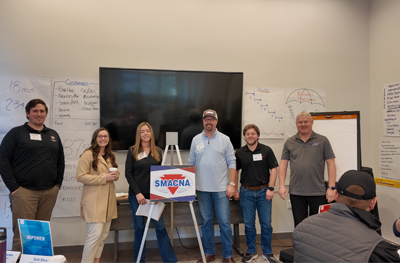
Strengthening SMACNA: Engaged Members, Stronger Connections I have enjoyed getting to know many members and chapter leaders. Engagement is a word that associations toss around a lot — usually when talking about how members interact with the association. SMACNA members are engaged in many ways.For me, specifically, engagement has always been attending SMACNA meetings. These events are critical and important on numerous levels. From a tangible standpoint, they are unique educational opportunities only available to SMACNA contractors and our chapter executives. Our programming encompasses so much of what is needed to thrive in our industry, especially in these interesting times. In April, we held the second SMACNA Fab Forum in Boston. This event, hosted by McCusker-Gill, was an opportunity for our members to learn more about some of the cutting-edge developments in the fabrication space and learn from a contractor on the leading edge of the work in this arena. Through this type of programming, we can help our members expand their professional toolboxes in a manner that enables them to deliver the highest caliber of work to our customers.Another recent educational and advocacy event was the CEA National Issues Conference. CEA is not only an opportunity for us to press our issues to our lawmakers in Washington, but it is also an opportunity for our members to learn more about the events shaping policy on the Hill. Over the past few years, much of the work done in Congress has shaped the business climate for our members. An event like CEA offers the opportunity to learn from subject matter experts, ranging from leaders of top-level think tanks to congressional leaders from both parties. SMACNA is held in the highest esteem by policymakers in D.C. CEA allows our members to help us share our incredible story. Related to CEA, another engagement point is our Political Action Committee. I am a long-time CIC member and have supported SMACNA’s legislative efforts for more than 20 years. Many of our most active members, board members and executive committee members started working with the PAC early in their journeys.Beyond the educational aspect of meetings, networking is incredibly crucial. Relationship building at the association level is more critical than ever. During my time with SMACNA, from my time as a Chapter Executive in Rochester to my time as the CEO in Virginia, these interactions were incredibly critical and beneficial. I recall fondly chapter executives who welcomed me when I started with SMACNA Rochester. Most of them are retired now and I have been in a position to offer the same warm welcome to new executives from around the country. I brought programs and ideas from SMACNA to all of my associations. I have also gotten the opportunity to learn from contractors of all sizes and share that information with other members.As you read, we are approaching our Annual Convention in Maui. Convention is the flagship event on our calendar, no matter where it is. For those of you who have the opportunity to join us in Hawaii in October, let me impart some of my own experience to you. The setting for this Convention is going to be stunning, and I don’t blame you for wanting to spend as much time enjoying the view as possible. I know I’m excited to touchdown in Maui. I urge you to use your time at Convention not only as an opportunity to relax, but to engage with your colleagues and learn as much as possible about what’s happening in our industry. This involvement (yes, engagement) makes SMACNA a better association. It helps us ensure that our industry continues to thrive.I hope you are having a great summer, and I’ll see you in the fall at SMACNA’s Annual Convention. Aaron Hilger is CEO of SMACNA, bringing more than two decades of executive association leadership to this role. Hilger is focused on building a stronger, more competitive environment for all SMACNA contractors.
by John Crowley | Jul 9, 2025 | Uncategorized
Union Contractors Make Capitol Hill Push at CEA Conference A tradition like no other: SMACNA representatives descended into Washington, D.C., for the latest edition of the Construction Employers of America (CEA) National Issues Conference.Over many years, the CEA has brought together some or all member groups to share the industry message with Members of Congress and the top administration officials. SMACNA, MCAA, TAUC and several other CEA members assemble each spring to learn more about the pressing legislative and political issues facing the union construction industry and engage with Members of Congress and their staff. The purpose of the CEA Washington Conference is simple: to steer policy questions that impact our members on an important collection of our top priorities, including workforce development, public sector contracting, procurement reform, business tax incentives, and much more. This year’s event took on added significance due to a new 119th Congress to educate and countless new appointments to brief in a changed administration. With any administration change, there are many new policy opportunities and many new advocacy challenges. However, SMACNA and its CEA allies prepare for every CEA Washington Conference visit to elevate our members’ issues nearer the top of the congressional and administration agenda for active consideration. The game plan is to make our industry’s voice heard loud and clear.This year’s conference was again chaired by former Congressman Earl Pomeroy (D-ND). Pomeroy, a long-time champion of our industry in Congress, represented North Dakota until 2011 before becoming senior counsel at Alston & Bird for over a decade. Pomeroy once again demonstrated why he is respected throughout the union construction industry and by members of Congress on both sides of the political aisle.The Monday session was opened with a fireside chat featuring Deputy Secretary of Labor Keith Sonderling. The deputy secretary has a long and distinguished career of federal agency service and policy involvement on labor-management issues. From 2020 to 2024, Sonderling served as U.S. Equal Employment Opportunity Commission commissioner. Before that service, from 2017 to 2020, he served as the deputy and acting administrator of the Wage and Hour Division of the United States Department of Labor. As the Deputy Secretary, Sonderling functions as the Department’s Chief Operating Officer. During his remarks, the Deputy Secretary highlighted a recent executive order seeking to expand apprenticeship opportunities. “We’re looking to move past the ‘you have to go to college’ model,” said Sonderling, offering the idea that the administration was looking to create over one million apprenticeships across the entirety of the skilled trades. “This is a lofty goal for sure, but it’s one that we are hoping to have the industry’s support for.”Following Sonderling was David Gardiner from the Combined Heat and Power Alliance. Gardiner, who has earned appointments at the executive level of government dating from the Clinton administration, detailed why there is a growing need to expand industrial energy efficiency by providing tax and program support for combined heat and power energy systems. He cited two developing areas of need within the nation’s infrastructure: growing domestic manufacturing and the ever-increasing footprint of data centers nationwide. Gardiner emphasized that the combined heat and power infrastructure must expand, considering the rise of artificial intelligence and its requisite energy and data capacity needs. Gardner was direct in the importance of contractors in this process. “The people in this room are critical in meeting this skyrocketing demand. You are at the forefront of helping meet the needs of our ever-evolving marketplace.”With tariffs on the minds of every CEO in attendance, John G. Murphy from the U.S. Chamber of Commerce outlined the opinion of the Chamber of Commerce, which is firmly opposed to the administration’s tariff policies. Murphy highlighted the Chamber’s arguments about how tariffs negatively impact foreign exports, trade balances and manufacturing throughout the United States. He also focused on how potential tariff retaliation by allies and adversaries could further harm the nation’s economy. His presentation also outlined how Canada produces a significant margin of the aluminum consumed by U.S. firms. This fact results from Canada’s widespread access to inexpensive hydroelectric power. Murphy also pointed to polling data that overwhelmingly indicated Americans are fearful and unsettled about the overall economic picture. Murphy further emphasized how Americans are concerned they will see growing inflation and a recession in the months ahead. He also pointed to declining consumer sentiment and heightened stress in the bond market. Murphy concluded that it is still unclear if the administration’s use of tariffs was designed as a bargaining strategy or a permanent revenue-raising tactic in long-term economic policy. The first in the long list of leading congressional speakers was Representative John Garamendi (D-CA-8), who addressed CEA attendees on the critical issue of infrastructure investments. Garamendi, who sits on the House Armed Services and Transportation and Infrastructure Committees, lauded the efforts of the construction sector: “Major construction projects and programs are the lifeblood of our nation, and everyone here is responsible for building that foundation.” He also urged everyone in the room to be direct and honest during their meetings with lawmakers on the Hill, “You need to be crystal clear with Congress about what you are seeing in front of you, you need to detail to them exactly the pain you are going through at this very moment.”Next on the issue-packed agenda was Philadelphia area Congressman Brendan Boyle (D-PA-2). Boyle is an influential voice in Congress on fiscal issues, with assignments on the Committee on Ways and Means and the House Budget Committee, where he serves as a ranking member. Boyle talked about the reconciliation process and where the Congress stood, quoting Yankees legend Yogi Berra, saying, “It gets late early.” He spoke a little about the mechanics of the reconciliation process. He clarified that he wanted to work with the GOP, where possible, on tax and spending priorities in the quickly developing budget package. He also warned that many businesses and contractors in his district are holding up making important hiring and investment decisions because they were unsure about where this tariff and reconciliation process would end up. The attendees were most fortunate to hear from the House Minority Whip Katherine Clark (D-MA-5) on the first day and House Majority Whip Tom Emmer (R-MN-6) on the conference’s second day. Clark, who represents suburban communities surrounding Boston, echoed several of the remarks made by her colleagues from the Democratic caucus. “No matter your ideological leaning, everyone wants a sense of certainty of where the economy is going … you want to be in a position where you can plan out your life to a point that goes beyond one news cycle.” She concluded her remarks by telling attendees, “You need to be put in a position to do what you do best … build.”Pomeroy said, “Everyone in this room is the best at what they do. Members of Congress would be well served to listen to what you have to say.” Agreeing with Pomeroy, SMACNA member Todd Byxbe of Miller Engineering Co., boosted Pomeroy’s sentiment, “We are the subject matter experts, but we are also constituents. We can build relationships with members of Congress and their staff and take the lead in forming the policy that will shape the future of everyone involved in our industry.” The CEA attendees wrapped day one of the educational sessions by welcoming Jim Brewer, Director of Legislative Affairs for North America’s Building Trades Union (NABTU). Brewer brought greetings from the organization’s president, Sean McGarvey, who could not attend this year’s conference. He thanked union contractors and CEA staff in attendance for their ongoing support for key legislative items such as registered apprenticeships, project labor agreements and prevailing wages. Brewer also talked about NABTU’s priorities regarding reconciliation, focusing on protecting labor standards within the existing tax code. He went into detail about their efforts to resist Department of Defense efforts to increase exemptions that would enable specific contracts to be executed without using a project labor agreement (PLA). “PLAs are a win-win for the government, the contractor and the taxpayer — we will continue to fight for this critical tool.” Brewer also noted that he and his team constantly warned lawmakers to pass on any attempt further to contract the use of PLAs in the public sector. Monday afternoon, the members in attendance departed for their appointments on Capitol Hill, where they met with their elected officials in the House and Senate and their professional staff. This year’s meetings proved more critically important than ever, with the uncertainty about record-level steel and aluminum and equipment tariffs and the reconciliation process front and center on the Hill agenda. Building on existing connections with staff is one of the more crucial aspects of each year’s conference, and CEA was prepared to do just that. As the CEA clarifies to its conferees, congressional staff are the subject matter experts within each House and Senate office. They are often the ones who will counsel legislators on policy decisions and help them make decisions on how to vote and potentially which bills and amendments to co-sponsor. These meetings play a crucial role in this process and allow our industry representatives to educate Hill staff and members, often positively influencing lawmaking. As attendees reconvened on Tuesday morning, they had the opportunity to hear from several leading members of the House Republican Conference. House Majority Whip Tom Emmer (R-MN-6) was the first to address the attendees, giving everyone an honest assessment of Congress and America’s current political climate. “We are currently amid a political realignment. The parties have changed, but the issues at their core have not.” Emmer detailed that his priority with the tax legislation was to bring certainty to the American business community and everyday people. “We have been operating under temporary tax policy for decades, and when one administration leaves, the next one will come in and rip it up. We must chart a course enabling Americans to make long-term decisions.” Emmer also took a moment to comment on how his party can navigate its historically narrow majority: “We aim to try to give everyone at least a sense that they have a seat at the table.” Following Emmer was Representative Pete Stauber (R-MN-8). Stauber, who sits on the House Committee for Small Business and the Committee on Transportation and Infrastructure, reiterated his support for the Davis-Bacon Act and its provisions that support high-quality union labor. “I think there are a lot of people on both sides of the aisle who forget the simple fact that both Davis and Bacon were Republicans.” Stauber continued, “I want to see my neighbors work in high-skilled fields that contribute to the prosperity of America while also doing something that they love.” He also explained his support for strong relations with Canada and Mexico: “A strong relationship with Canada and Mexico is critical. These two countries have been some of our strongest allies and most reliable trading partners for so long. Keeping these ties is in America’s best interest.” Representative David Joyce (R-OH-14), the day’s final speaker and SMACNA President Tom Martin’s Congressman, discussed Congress’s need to get contractors the necessary resources. “It is up to us to get you the workforce you need to get the work of our country done.” The congressman also talked about what he perceived as the need for permitting reform, “We cannot wait four to five years for paperwork to clear to get shovels into the ground, considering the various challenges we face at the moment, we need to be getting the clearances out of the way in a reasonable fashion that doesn’t see a project bogged down by red tape.” Joyce also discussed how he felt the government needed to become more nimble and better able to react to the needs of its constituents: “We need a government that moves at the speed of business and can tackle head-on the needs of its people in a way that enables prosperity.” At the end of the three-day Conference in the Nation’s Capital, attendees could see the impact of their work in conference sessions and on the Hill. SMACNA’s Executive Director of Government and Political Affairs Stan Kolbe agreed and emphasized, “The face-to-face educational meetings and contacts made by our contractors and executives over the limited time they are in Washington, D.C., are of incredible value to me and our association goals and achievements. While the progress made by our SMACNA member “lobbyists” who attend the CEA Conference cannot be fully appreciated now, every year I see in the weeks and months to following the CEA how the connections they made with their lawmakers, coupled with the contractor messaging directly to top staff and members pay off big-time. The benefits of SMACNA on issue after issue and vote after vote serve our industry and Congress. Kolbe continued, “I greatly appreciate everyone who makes the journey to Capitol Hill to share their policy views and business stories with staff and members of Congress. It is how our system works best when informed business CEOs speak contractor truth to powerful members who are often inexperienced in construction. These Hill meeting sessions are needed to support our aggressive legislative advocacy campaign and the industry’s union contractor segment.” In this period of increasing uncertainty on various fronts, having a seat at the table is more important than ever. Warren Creamer of SMACNA Boston, who was attending CEA for the very first time, summarized his experience at CEA: “So many of us have been on the sidelines. We can’t afford to be on the sidelines any more … unless you are getting out there and getting your message out to those who make the decisions, you will be left behind.
by John Crowley | May 5, 2025 | Uncategorized
Safety First: SMACNA Sponsorship
Opportunity & Safety Awards Applications are due May 31, and the winner will be announced July 15. Learn more and apply here: tinyurl.com/SafetySponsorship. Also, you can complete the 2025 SMACNA Safety Survey and apply for the 2025 Safety Awards here: tinyurl.com/SafetyAwardsProgram. Deadline is June 1.