by John Crowley | Jan 12, 2026 | Uncategorized
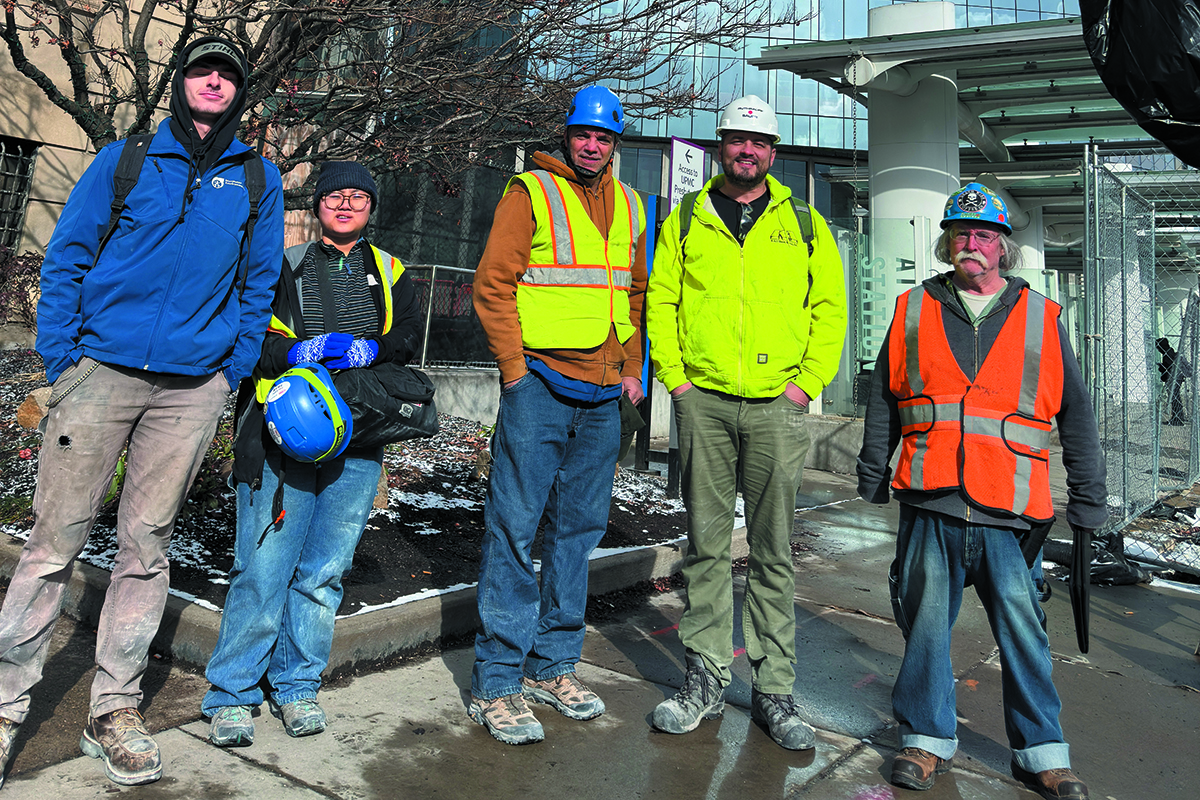
Appeals Court Upholds Minnesota’s Construction Worker Misclassification Law In Minnesota Chapter of Associated Builders & Contractors v. Blissenbach, the court affirmed a lower court’s refusal to block Minnesota from enforcing its construction worker misclassification law.Minnesota’s 2024 law imposes a 14-factor test that must be satisfied for a worker to be treated as an independent contractor in the construction industry.This is good for union contractors. It reaffirms a state’s authority to regulate labor standards within the construction industry and prevents contractors who misclassify workers from gaining a competitive advantage by avoiding payroll taxes, insurance obligations, wage protections and collective bargaining responsibilities.MINNESOTA’S CONSTRUCTION WORKER MISCLASSIFICATION LAWEffective March 1, Minnesota’s comprehensive 14-factor independent contractor test applies exclusively to workers engaged in commercial or residential construction or improvement services. To be considered an independent contractor, an individual operating as a business entity must meet all 14 criteria, including:Business Independence – The business entity must be established and maintained separately from the contractor hiring it and must provide services to multiple clients or the general public.Operational Capacity – The business entity must own or lease tools, equipment, vehicles or facilities necessary to perform the work.Legal and Tax Compliance – The business entity must hold any required MN or federal tax ID numbers, receive and retain Form 1099s when applicable, file business or self-employment tax returns and provide a W-9 when required.Regulatory Compliance – The business entity must carry workers’ compensation insurance (if required), a Minnesota unemployment insurance account (if required) and any required business licenses and certifications.Contractual Requirements – The business entity must perform work under a signed and dated “written contract” that is “fully executed” within 30 days of starting work, “identifies the specific services to be provided or performed” and “provides for compensation from the person for the services provided under the contract on a commission or per-job or competitive bid basis.”Payment and Invoicing – Payment must be made only upon invoices submitted in the name of the business. Cash payments do not qualify.Control and responsibility – The contract must give the business entity control over the means and methods of performance, and the entity must be responsible for completion of the work and liable if it is not completed.Risk of Profit or Loss – The entity must be able to realize a profit or suffer a loss depending on performance and expenses.Failure to satisfy even one of the 14 factors results in the worker being classified as an “employee” and not an independent contractor under Minnesota law. The Minnesota Department of Labor and Industry (“DLI”) and the Minnesota Attorney General have enforcement authority. There also is a private right of action, through which a misclassified individual may seek compensatory damages.The law also authorizes discretionary civil penalties that may include:Up to $10,000 per misclassified workerUp to $10,000 per violation of the law’s disclosure and classification requirementsA penalty of $1,000 per day for obstructing a Minnesota DLI investigation Individuals who knowingly or repeatedly engage in any of the prohibited activities may also be held liable.BOTTOM LINEExpect more states to look to Minnesota’s law as a way to stamp out fraud in the non-union construction sector, level the competitive playing field and ensure that workers receive legal wages, benefits and protections.Grant Collins is a specialist in labor and employment law at Felhaber Larson. Reach him at gcollins@felhabor.com
by John Crowley | Jan 12, 2026 | Uncategorized
When the Sky Isn’t the Limit As a child in Santa Maria, California, Nicole Malachowski’s fascination with aviation began after she saw an airshow.Retired Colonel Nicole Malachowski speaks to the SMACNA Annual Convention Keynote audience. “Sometimes I wonder if it’s weird that I declared at age 5 I wanted to be a pilot, and it actually happened,” says the USAF Retired Colonel, her tone equal parts humility and steel. That relentless drive shaped her youth: soloing in a Cessna at 16, then earning her Air Force commission. “People looked at me and said there’s no way I’d become a fighter pilot; it was against the law for women then. I found that made the dream more intriguing,” she says.As one of the first women to fly the F-15E in combat and the first woman Thunderbird pilot, Malachowski later led a squadron, flew 2,300-plus hours and 188 in combat, and managed resources exceeding $1 billion.So, when she takes the stage to speak, audiences expect tales of high-speed flight and military discipline. What they don’t expect is how gracefully she links those stories to leadership, vulnerability and gratitude.RISK, FAILURE & LEARNINGMalachowski’s commitment to mastery is legendary, but she doesn’t shy away from discussing setbacks. She recalls herearliest check ride as a pilot, which she failed due to a minor but consequential mechanical oversight. “I went back to mydorm, devastated, and cried. I entertained quitting,” Malachowski says. Her mentor’s response reframed the experience.“She told me, ‘Failure is the price of entry for achieving something great,’” she says. “Success is not born when you get things right; it’s born when you move forward after failing.”For her, vulnerability is a source of power. “People think military culture is about the perfect persona, but the real essence of elite teams is vulnerability — being honest about mistakes and learning from them,” she says. “When you demonstrate vulnerability, you empower your teammates to do the same. That builds trust, as well as loyalty and better performance.”A SEASON FOR CHANGEThe Colonel’s message resonates deeply with SMACNA’s changing industry, emphasizing adaptability, self-awareness and timing as critical leadership traits. She describes autumn as a metaphor. “Like trees that shed leaves in fall,” she says, “we must let go of obsolete practices and embrace change. Healthy organizations make it through seasonal transitions by building psychological safety and supporting diversity, which helps teams become less resistant to change and more engaged in innovation.”Malachowski’s personal journey from fighter pilot to leading national initiatives to surviving a devastating, career-ending illness adds gravity to her words about letting go and starting anew. “I was medically retired for a brain infection,” she says. “I had to reinvent myself. ‘Yield to overcome’ became my mantra. It wasn’t about quitting, but accepting what is and asking, ‘What can I do to move forward from here?’ The runway behind you is always unusable. All you have is the one ahead.”LEADING WITH PURPOSEMalachowski’s time with the Thunderbirds taught her to see a formation of six jets not as six aircrafts, but as “one aircraft and six people perfectly aligned.”“It’s a mindset we all can adopt: the precision, the integrity and the trust in the person beside you,” she says. “That’s what makes great teams, whether in the air or on a construction site.”For an industry navigating its own headwinds — generational shifts, evolving technologies and the need for new talent —Malachowski’s words carry more weight than ever. “Nobody wants to lead a scripted life,” she says. “Leadership is aboutadapting to change, lifting others and never underestimating the power of gratitude and vulnerability.
by John Crowley | Jan 12, 2026 | Uncategorized
On the Front Lines of Policy When Congressman Ed Case sits down for a conversation at the Grand Wailea in Maui, it’s hard not to feel the contrast between the island’s serene beauty and the turbulent national issues he tackles daily. Case, who represents Hawaii’s 1st District and serves on the powerful House Appropriations Committee, has spent his career navigating the space where global strategy meets on-the-ground impact. And for SMACNA members, his message is clear: “you’re not just building facilities; you’re reinforcing America’s strength in a volatile geopolitical landscape.”Case has been a longtime ally to SMACNA, returning year after year to connect with contractors who build and maintain the very infrastructure that keeps America secure.This year, as he sat down with SMACNA’s Director of Content Development and Media Relations Policy Seth Lennonfor SMACNews, he unpacked the intersection of defense, construction, supply chains and governance at a moment he calls “deeply consequential.”BUILDING THE BACKBONE OF NATIONAL DEFENSEBefore diving into politics, Case wants to establish one essential truth: America’s military strength depends on theprivate sector, especially the skilled contractors who build, repair and sustain the infrastructure of the armed forces.“Hawaii is the center of the Indo-Pacific,” Case explains. “Every single combatant command for the region is in my district. This is the front line of our country’s defense.”That front line requires more than ships and submarines. It requires the places they live, train and maintain readiness, which makes up a sprawling network of facilities that SMACNA members help build.As a former member of the Military Construction (MILCON) Subcommittee and now a senior member of the Defense Subcommittee, Case sees how essential high-quality construction is to deterrence.“We completely rely on contractors for our national defense,” he points out. “If a project doesn’t work it’s not just a hassle; it’s a security risk.”In Hawaii alone, billions are being invested right now, including the largest Navy project in its history: a world- class dry dock at Pearl Harbor. It’s infrastructure that will allow next-generation submarines and eventually larger ships to be repaired forward-deployed rather than traveling thousands of miles back to the mainland. That difference, he notes, could define readiness in a crisis.A WORKFORCE WITH RANGE AND RESPONSIBILITYFor Case, the work happening in Hawaii is a microcosm of what SMACNA contractors deliver nationwide: a wide spectrum of industrial, commercial, residential and defense projects requiring deep expertise.“You’re building everything, including residences, commercial structures, industrial sites and critically important military facilities,” he says. “That level of versatility and quality is not easy to find. But it’s essential.”With more than 7,000 industrial workers at the Pearl Harbor Naval Shipyard and world-class contractors surrounding them, Case sees a model of what effective public-private partnership looks like when national security is on the line.SHUTDOWNS AND THE COST OF DYSFUNCTIONCase warns that political dysfunction threatens everything from paychecks to national security. When he spoke with SMACNews in late October, the federal government was in the middle of another shutdown. His assessment is blunt.“The biggest challenge is the political dysfunction in our country,” he says. “We’re living in two parallel universes. When the mindset becomes ‘win it all or lose everything,’ governing becomes impossible.”In Hawaii alone, a shutdown means 24,000 federal civilian workers and 48,000 active-duty service members going without pay. It jeopardizes procurement, contracts, planning and, ultimately, national security.Case insists solutions exist and could be enacted “in one or two days,” but only with functional, bipartisan cooperation. “We’re better off solving our problems rather than chasing 100% wins that just kick the can down the road,” he says.TRADE AND TARIFFSFew issues today affect contractors more than tariffs, and Case doesn’t mince words about their impact.“I generally believe the world is better off with open, free trade,” he says.Isolationism, he argues, has never produced long-term success for the U.S., but he acknowledges that there are legitimate reasons for targeted tariffs, such as national security concerns or countering abusive trade practices.The problem, in his view, is the blanket tariff policy.“Across-the-board tariffs punish our allies, raise costs for everyone and create massive uncertainty, especially for construction,” he warns.For SMACNA members, that uncertainty hits bids, supply chains, costs and scheduling. It increases litigation and erodes predictability — critical components of construction planning.And while the administration argues tariffs could revive American manufacturing, Case remains skeptical.“It’s going to take far more than tariffs for industrial America to come back,” he says. “Trade policy needs nuance, not blunt instruments.”FINDING COMMON GROUNDDespite the political gridlock he describes, Case remains a pragmatic optimist. He’s committed to “problem solver” approaches and believes bipartisan partnership is still possible and necessary.“We have huge challenges: economic prosperity, global relationships, preserving Social Security and protecting our environment,” he says. “All of them are solvable if we face them together.”According to Case, SMACNA members “are essential partners. Your success is critical not just for national defense, but for our country’s overall strength.
by John Crowley | Jan 12, 2026 | Uncategorized
P1 Construction Sets New Benchmark in Construction Safety with Dual Innovation Programs Setting a new standard in construction safety by blending rigorous physical safety training with proactive mental= health support, P1 Construction of Lenexa, Kansas, earned SMACNA’s 2025 Safety Innovator of the Year Award.The award, presented jointly by Vincent Neglia of Milwaukee Tool and Dave Szymanski of Federated Insurance, honors innovative ideas that significantly improve safety culture and outcomes in the industry.P1 Construction won for two key initiatives: the Second Orientation Program and the Peer Connector Mental Health Program. The Second Orientation targets a critical risk period by providing new hires a refresher safety training 60 days after they begin, addressing data showing nearly half of workplace accidents occur in the first year. This helps reinforce safety knowledge and reduces early-stageincidents.The Peer Connector Program offers voluntary, peer-to-peer mental health support, breaking stigma and ensuring judgment-free access to help. Trained employees serve as confidential resources, identified by special hard hats and branding, offering immediate assistance and connecting colleagues to professional support as needed. Inspired by a P1 safety specialist and military veteran, this program addresses suicide prevention in both construction and veteran communities.Don Campbell, P1 Vice President, says, “We always remain focused on our most important resources: the human ones. Through rigorous daily checklists, mental health resources, training and mentorship, P1 leadership, from the top down, is committed to ensuring our associates show up mentally and physically prepared to make the best decisions every day.” In addition to the award, SMACNA and its partners donated $2,500 to The Battle Within, a nonprofit organization supporting veterans and first responders battling PTSD, chosen by P1 Construction. Michele Orpin, Director at The Battle Within, expresses gratitude for the donation. “Our entire team thanks you for this opportunity,” she says.Meet the 2025 SMACNA Safety Award WinnersThe SMACNA Safety Awards Program celebrates the commitment and inventive efforts of members to provide secure environments for their employees. The awards recognize past accomplishments, as well as inspire a future marked by a dedication to safety and health within the HVAC and sheet metal industry.There are two award categories: Top Safety Performer and Zero Injury and Illness Incidence. All members achieving an incident rate of 50% better than the U.S. Department of Labor BLS incident rate for sheet metal contractors in the U.S. and the adjacent rate for Canadian members will receive certificates as elite safety performers. All members demonstrating an outstanding safety record with zero reported incidents in 2024 receive certificates for safety excellence.The 2025 winners are:TOP SAFETY PERFORMER AWARD:Airco Mechanical Inc.Bel-Aire MechanicalControl Air Enterprises LLCCouts Heating and Cooling Inc.Dee Cramer Inc.General Sheet MetalGoyette MechanicalHarder Mechanicalicon MechanicalJH KellyLeo J. Roth CorporationMacDonald-MillerMarina Mechanical ServicesP1 Construction LLCPoynter Sheet Metal Inc.SSM Industries Inc.StreimerTweet/Garot Mechanical Inc.U.S. Engineering ConstructionW.E. BowersZERO INJURY AND ILLNESS INCIDENCE AWARD:A T Industrial Sheet MetalAccu Flow Balancing Co.Apollo Mechanical ContractorsCrystal Heating & Cooling Service Inc.D|B Solutions LLCDynamic Balancing Co.Evergreen State Heat & ACFisher Balancing Co.G.E.S. Sheet Metal Inc.H & R Mechanical Systems Inc.Hays Sheet Metal Inc.Hunter MechanicalIntech Mechanical Co. Inc.Johansen Mechanical Inc.Just Right Heating & CoolingLeibold Inc.McGowne Ironworks LLCModern ControlsNeudorfer EngineersOptimum Performance Balancing LLCOrtiz Contracting GroupPM ContractingPrecision Air Designs Inc.Prime Sheet Metal Inc.Restaurant Ventilation DesignS & Z Sheetmetal Inc.Scoggin Mechanical Industries Inc.TAB Systems Inc.Total Comfort Solutions, Inc.Tri-State Roofing & Sheet Metal Co.Van’s Industrial Inc.
by John Crowley | Jan 12, 2026 | Uncategorized
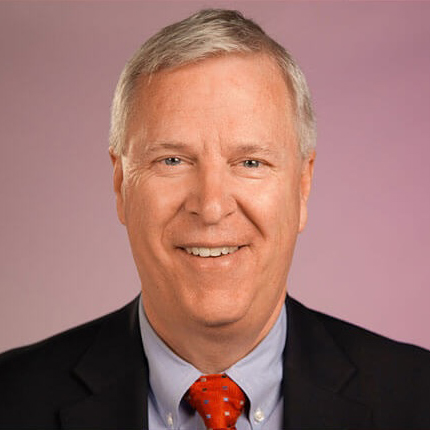
A Journey Built on Opportunity: SMACNA’s New President Looks Ahead Aloha, everyone. It means the world to me to serve as your 2025-2026 SMACNA National President. When I first started in this industry, I never realized the opportunities that would come my way. I truly care about SMACNA’s mission and will do my best to earn your trust. For me, SMACNA’s core value is enabling opportunities for its members. I began my career in the trade in 1990 at age 19, while attending community college full-time. My father encouraged me to take the sheet metal apprentice test, and his advice proved invaluable. Looking back, I am grateful for his guidance.My father, who passed in 2018 after a 43-year career in sheet metal, took great pride in his work. As I advanced at Ventcon, he often reminded me of the value of his advice. I hope to continue makinghim proud.I now have been with Ventcon for 35 years. I am grateful to everyone who has supported me, both as a business leader and as a member of this association. Our industry offers unique opportunities for career advancement through dedication and hard work.SMACNA offers valuable benefits, especially when it comes to technology, labor and business management. Ourindustry keeps changing, which means there are always new chances to grow. I encourage you to get involved. Other members have a lot of experience to share. By joining in, you can discover new ways to run your business and create more opportunities for yourself and your team. Investing in my career and business by being active in SMACNA has been one of my best decisions.If I can inspire even one person to take full advantage of what SMACNA National offers, I will consider my presidency a success. Thank you for this opportunity to serve. I look forward to connecting with many of you in the coming year. Todd HillSMACNA President
by John Crowley | Jan 12, 2026 | Uncategorized
A Gathering to Remember: Gratitude, Growth & the Power of Community It is always fun to bring the SMACNA convention to Maui. It was wonderful to connect with members and learn from great speakers. This convention was the most attended in SMACNA history. Record attendance speaks to the desire of SMACNA members to be engaged with their association. Education sessions were full, and we know that we will need more space when we return in 2030. It is also normal and healthy for associations to have debate at meetings. Associations are governed by members, and members should bring up things that concern them. I do encourage members to utilize the Council of Chapter Representatives to address programmatic concerns. The Council is designed to address issues and has the ability to make recommendations to the board. The Council meets each year in June and December, right before the Board’s meetings in January and July.I am excited to work with Todd Hill during his term as our new president. Todd’s story is incredible. Rising from Apprentice to Owner of his own company to the President at SMACNA. This is a trajectory that is only possible in our industry, and Todd certainly became the “smart” sheet metal worker that his father encouraged. The energy, enthusiasm and leadership that Todd brings to the table will benefit all of our members. I encourage you to connect with him and invite him or your board liaison to your chapter in 2026.Finally, I want to thank our SMACNA staff for all of their hard work in making this convention the best in SMACNA’s history. From working with the hotel to promoting the event and building out the educational programming, none of this is possible without the work of our team at National. As we look forward to 2026, we will be full speed ahead. I’m looking forward to the first six months of the new year, which include critical events such as Partners in Progress, the MEP Innovation Conference, the Safety and Health Conference and the Fab Forum. For those of you bargaining this year, I also encourage you to attend Collective Bargaining Orientation in early January. The program is great preparation for negotiations. Joining the bargainers’ calls can also help keep you informed about issues and settlements as they occur. These are all opportunities to engage with your peers. I hope you take advantage of them. I hope everyone has a safe and joyous holiday season. I am looking forward to 2026!