by John Crowley | Oct 21, 2025 | Uncategorized
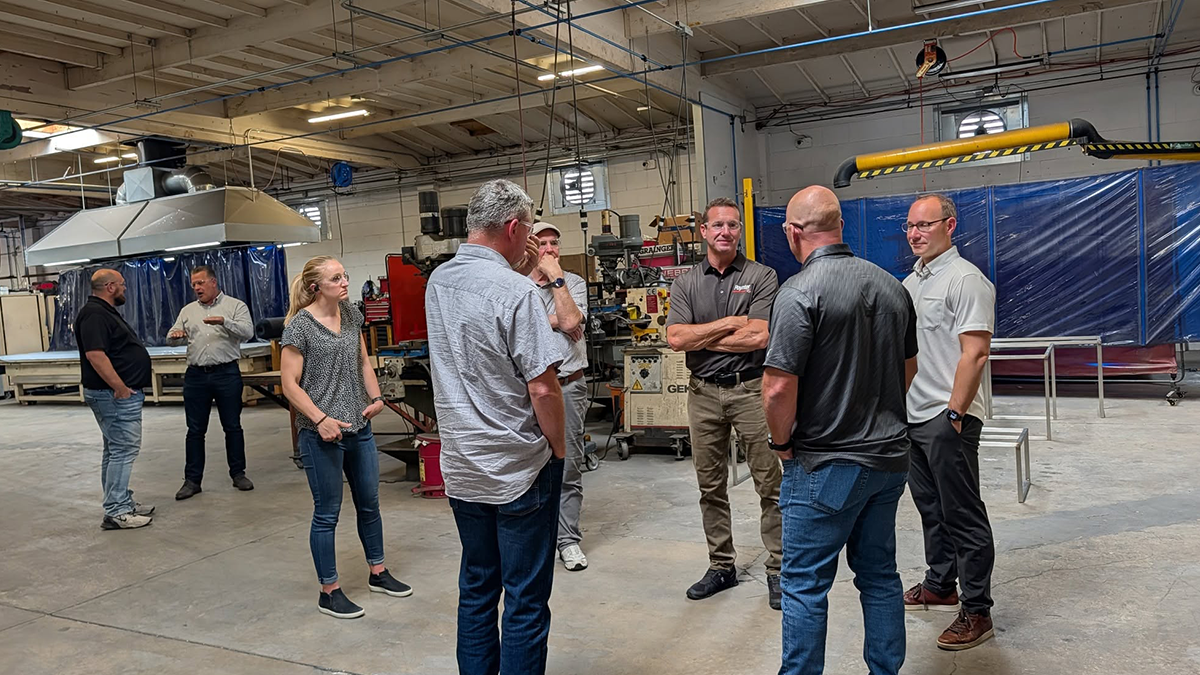
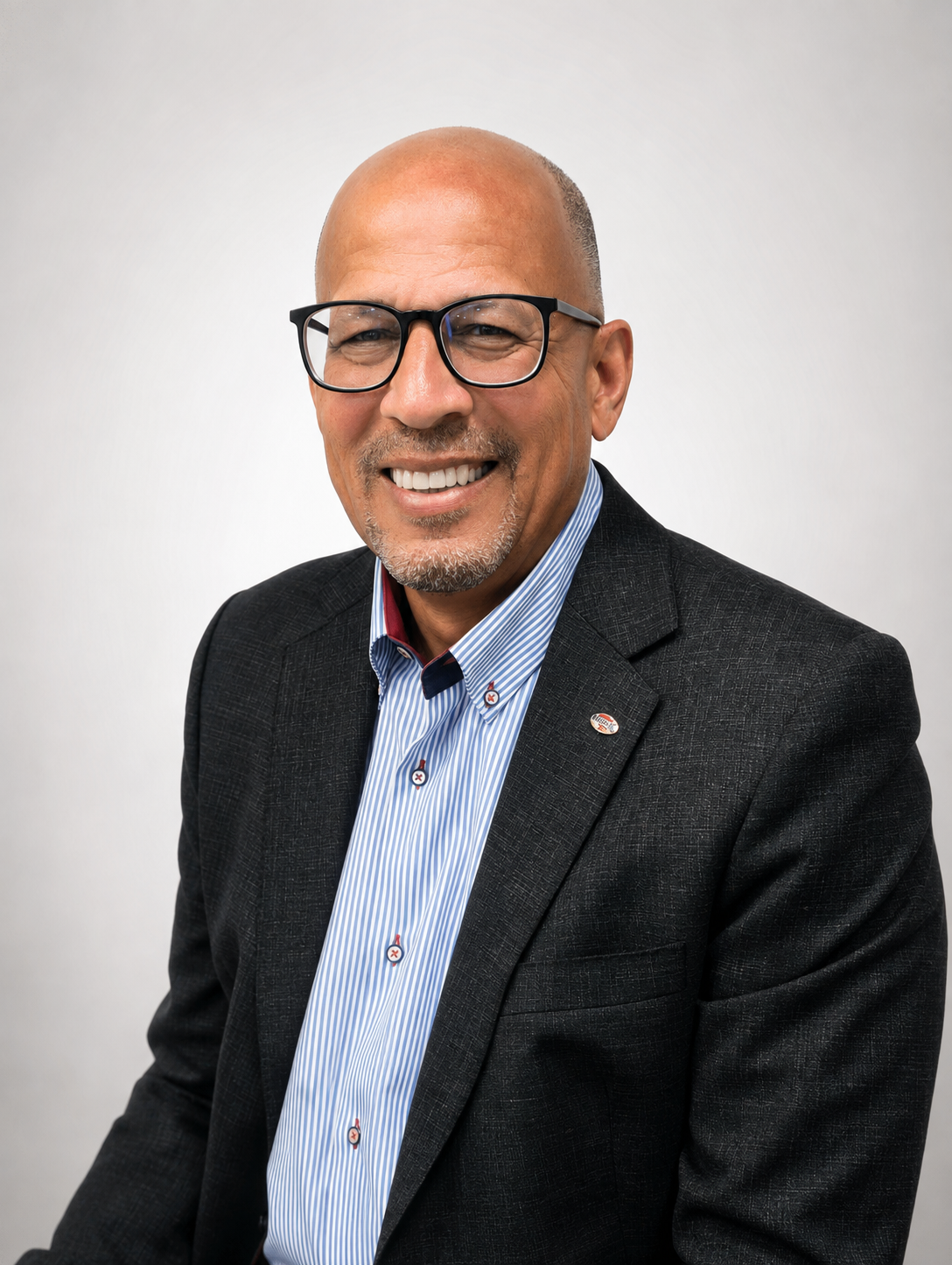
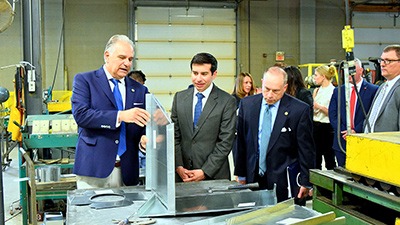
How Getting Involved Can Make a Big Difference During my time as president, I’ve made it a priority to stay active in every part of our association. Getting involved in politics is a powerful way to make a real difference for your business and our industry. I know politics can feel tiring these days but connecting with lawmakers from any party really does help us make progress on the issues that matter.During my time with SMACNA, I’ve made it a point to get to know our members of Congress and help their staff understand our issues and how they can support the skilled trades. I’ve met with legislators, including Congresswoman Shontel Brown, Congressman Dave Joyce and Congresswoman Emelia Sykes, at events ranging from golf tournaments to tours of our training centers and shop floors. These experiences have been key in helping our allies in Congress see what’s happening in our industry. We’ve discussed important topics, such as registered apprenticeships and how our field offers a path to a debt-free, well-paying career. I also highlight our commitment to workforce development and to creating a welcoming environment where everyone’s skills are valued. Our industry offers both men and women opportunities to grow, advance into management and even become owners. Regardless of your political views, I believe we can all support these goals. But achieving them depends on us. We are the experts, and our legislators rely on us for the information they need to make good decisions for our future. I encourage everyone to reach out to Stan and our legislative affairs team to learn about opportunities for getting involved.As my term as president ends, I hope I’ve made a positive difference for our association. By the end of my term, I’ll have spent over 150 days traveling. It’s been amazing to visit new places and take part in so many great events. I’ve met contractors and chapter leaders from across the country, all of whom are dedicated to supporting SMACNA and our industry. Along the way, I’ve made new friends, listened, offered support and helped tackle challenges when needed. I’ve enjoyed presenting and joining local meetings, and it’s been an honor to keep everyone informed about what’s ahead. Thank you for your trust this past year. It truly has been a remarkable experience. Tom MartinSMACNA President
by John Crowley | Oct 21, 2025 | Uncategorized
SMACNA’s Legacy of Government Relations Government relations have always played a key role at SMACNA. I first met Stan Kolbe and Dana Thompson from the National SMACNA staff back in 1993. After my freshman year at the University of Rochester, I interned with the National Roofing Contractors Association. Thanks to Stan and Dana, SMACNA remains as strong now as it was in the 1990s. The relationships they built then still matter today. Being consistent and knowledgeable about policy, as well as attending meetings, are all essential for success. When I served as a chapter executive, government relations was one of the biggest ways I added value. Like Stan and Dana, I spent years in New York building relationships that made a difference for our members. Managing several groups helped us share costs, but what really mattered was being a trusted policy expert and always being open to conversation. Working with great partners like Denise Murphy McGraw, who supports SMACNA’s state and local programs, has also made a significant difference.Some of you joined a recent webinar we hosted with my friend, New York State Assemblyman Harry Bronson. I’ve worked with Harry for almost 20 years, starting when he was counsel to the Assembly Labor Committee and a top staffer for a member I knew well. Today, Harry chairs the Labor Committee, which is especially important for SMACNA members. We didn’t always agree, but we always discussed issues and policy openly. Together, we achieved a lot for our community and union contractors. One highlight was a $1 billion school renovation program that improved city schools and created significant work for our members, all with clear and transparent PLAs.I also worked with another assembly member who later became the majority leader of the New York State Assembly. Joe Morelle is now a leading Member of Congress and a strong supporter of union contractors. We first started working together on insurance issues in 2004. That work then moved to economic development and project funding and was very successful for our community. Building relationships with great members of Congress like Morelle takes years of effort and partnership at the local level!Many of our chapters are actively engaged in state and local issues. Some states have already passed indoor air quality legislation, and others are considering it. Labor and construction bills often arise, and we don’t always agree with all of them. Permitting can be a challenge for projects, but we can help make it easier. Chapters can also support economic development and get involved early in new projects that need political backing to succeed.SMACNA will continue to support state and local efforts, just as we have in recent years. I’m also happy to share that SMART is now investing nationally in state-level work. This will help us work together more effectively on shared issues and create more opportunities for our members.If there’s an issue that matters to your chapter, please let us know. Small local issues often grow into bigger national concerns. SMACNA wants to be involved early and do everything we can to support our members.I look forward to seeing you at the convention and hearing about the work you are doing! Aaron HilgerSMACNA CEO
by John Crowley | Oct 21, 2025 | Uncategorized
Welcome New SMACNA Members Advanced Air Service Group, Aston, PennsylvaniaF.D. Ramsey & Co. Inc., La Porte, IndianaIndustrial Contracting & Engineering, Angola, IndianaPayne Mechanical Inc., Flushing, MichiganU.S. Engineering Service, LLC, Wichita, KansasYork Plumbing & Mechanical, Tulsa, Oklahoma
by John Crowley | Oct 21, 2025 | Uncategorized
Fifth Circuit Finds NLRB Structure Likely Unconstitutional The Fifth Circuit concluded that the removal protections for NLRB Members and Administrative Law Judges (ALJs) likely violate the U.S. Constitution.The Fifth Circuit’s ruling does not shut down the NLRB. The decision is binding only in Louisiana, Mississippi and Texas — the states covered by the Fifth Circuit. But it marks another setback for the NLRB, which is already facing litigation over President Trump’s firing of NLRB Member Gwen Wilcox and is hampered by a lack of “quorum” that prevents the Board from taking official action.Removal Protections Likely Unconstitutional, Fifth Circuit SaysThe Fifth Circuit focused on how, under the NLRA, decision makers are shielded from termination by the President. Specifically, Board Members may be removed only “for cause,” and ALJs are doubly protected: they may be removed only for cause and only through another board.The court concluded that these removal protections for NLRB Members and ALJs likely violate the U.S. Constitution. It further held that being subjected to unconstitutional proceedings constitutes irreparable harm, granting the employers’ requests for an injunction to halt their NLRB proceedings.The NLRB is expected to appeal to the U.S. Supreme Court, which will ultimately decide whether the NLRA’s removal protections are constitutional.The NLRB’s “Quorum” CrisisAdding to the uncertainty, the NLRB currently lacks a quorum. According to a 2010 U.S. Supreme Court decision, the NLRB must have at least three members to exercise its authority. After President Trump fired NLRB Member Gwen Wilcox in February 2025, the Board was reduced to two members: David Prouty and Marvin Kaplan. Kaplan’s term expired on Aug. 27, leaving the NLRB with only one member. Without a quorum, the Board cannot issue decisions, leaving hundreds of cases in limbo.There is some hope that the quorum crisis may end. In July 2025, the White House nominated Scott Mayer, who is currently Chief Labor Counsel for Boeing Co., and James Murphy, a longtime NLRB attorney and counsel to multiple Republican members, to fill the vacancies. If confirmed by the Senate, the Board would have the three members needed for quorum. However, the Senate has not yet scheduled hearings on either nomination.States Attempt to Step into the FrayIn response to the NLRB’s paralysis, several states are moving to fill the gap by proposing “mini-NLRAs.”New York — Legislators in New York have passed Assembly Bill A8590/Senate Bill S8034A, which would empower the state’s Public Employment Relations Board to handle private-sector labor disputes when the NLRB cannot act. It has passed both houses and awaits Governor Kathy Hochul’s signature.California — Legislators in California are currently considering Assembly Bill 288, which would authorize the state’s Public Employment Relations Board (PERB) to handle private-sector labor disputes if the NLRB fails to act in a timely manner.These efforts may clash with federal law, which normally preempts state regulation of private-sector labor relations, but legislators say they are necessary backups.The NLRB Fires BackOn Aug. 15, Acting NLRB General Counsel William Cowen issued a memo warning that any state attempt to assert jurisdiction over matters governed by the NLRA would be preempted. The memo cited San Diego Building Trades Council v. Garmon, 359 U.S. 236 (1959), which held that states may not regulate conduct “that the NLRA protects, prohibits, or arguably protects or prohibits.” Cowen says legislation like that in New York and California “cannot be reconciled with the Supremacy Clause, found in Article VI, Clause 2 of the U.S. Constitution.” The message was clear: the NLRB intends to continue operating and defending its authority, despite the Fifth Circuit ruling and its current lack of quorum. Grant Collins is a specialist in labor and employment law at Felhaber Larson. Reach him at gcollins@felhaber.com.
by John Crowley | Oct 21, 2025 | Uncategorized
The Majority of SMACNAMembers Need a CTO Yet many companies still lack something critical: an executive dedicated to technology strategy.In most industries, that role is the Chief Technology Officer (CTO). The CTO ensures technology decisions align with business goals, but in construction the path to that seat looks different.In my experience, most construction technologists don’t come from big named MBA programs. They tend to start in VDC, BIM, estimating or project management, hands-on roles where they quietly shape the tech stack, usually attacking one problem at a time. They troubleshoot software, smooth workflows and help jobs run safer and more efficiently. Over time, someone notices: “You’re basically the CTO already.”These emerging leaders have succeeded not because of a business degree, but because they deeply understand industry workflows and where technology creates impact. Finance, budgeting and forecasting can be learned. What can’t be taught is the passion for building smarter. As one colleague put it, it’s easier to teach finance to a field-driven technologist than to teach construction to a business generalist.This role needs to evolve, and it is crucial that it grows beyond this stage. The informal “accidental technologist” model eventually breaks down. A BIM manager or project coordinator juggling tech decisions alongside other duties can’t drive long-term strategy. Adoption falters, implementations stall and opportunities are lost.Technology today is operational, not support. Choosing software and structuring data flows directly influences performance and profitability. Systems are interconnected: an ERP decision affects field operations; a fabrication tool influences estimating. Only a leader with a cross-functional view can make sustainable choices.As younger professionals enter the industry, they expect modern tools and efficient systems. Appointing a CTO signals that your company values innovation and is investing for the future. Not only is this important for operational success, but it also differentiates your company and becomes a strategic move.For technologists in the room aspiring to the role, the path starts with visibility. You must build your case. Map your digital workforce like an org chart: systems, contracts, training, support and innovation. Identify gaps and inefficiencies. Document wins, show ROI (even if I contend that they can be vague) and demonstrate how your work drives company-wide value. Don’t assume executives see it; prove it.Succession planning is another marker of readiness. If you’re wearing 12 hats, identify who will take over your day-to-day when you step into leadership. Build your case like a project: scope, budget, timeline and backfill. Then present the vision: “Here’s what we could accomplish if I had the authority to lead these changes.”A common pushback is, “You’re already acting like the CTO; why change anything?” The answer is simple: authority matters. It needs to be made official. Without the title, you lack the power to make decisions, establish policies or hold others accountable across departments. The company expects leadership without granting the mandate or support structure.When formalized, the CTO role unites departments, accelerates decisions and maximizes the value of digital investments. It’s not about a title; it’s about building a future-ready business.It’s important to remember that the best CTOs aren’t isolated in corner offices. They’re out with teams, listening, adjusting and ensuring the tech program works. Done right, the role becomes the athletic director of your digital ecosystem; coordinating coaches, players and equipment to keep everyone moving in the same direction. Travis Voss is the Director of Innovative Technology and Fabrication at SMACNA. He leverages his background in the tech field to explore, adapt and potentially develop technologies and workflows for the construction industry, particularly as it undergoes its digital transformation.