 The story of the American trades has long been told as a story of inheritance — fathers handing off tools to sons, knowledge passed down through bloodlines and bench time. And while that lineage still runs deep through the sheet metal and HVAC industry, something new is happening. Across the country, a growing cohort of professionals is choosing the trades not because they were born into them, but because they sought something the corporate world couldn’t give them: tangible work, real community and the kind of legacy that outlasts a quarterly earnings report.
The numbers tell part of the story. Ninety percent of SMACNA contractors report facing a labor shortage. The pipeline is not keeping pace with demand, and that gap represents both a challenge and an opportunity for career changers willing to make the leap.
The Bureau of Labor Statistics projects steady demand for HVAC and sheet metal workers for years to come, driven by infrastructure investment, green energy retrofits and the complexity of modern construction. These are cloud-connected, data-driven and precision-engineered industries hungry for the exact kinds of minds that Wall Street, academia and Silicon Valley have been cultivating.
Meet three of those minds: Garrett Montrone of Western Sheet Metal in Salt Lake City, a former Goldman Sachs technology analyst now three generations deep in a family legacy that started in a chicken coop; Ernie Menold, newly installed president of Ernest D. Menold Inc., a Philadelphia-area firm with seven decades of history; and Devon Madon, co-owner of Madon Sheet Metal, who holds a Ph.D. in Shakespeare and helped build a specialty welding shop from the ground up.
Their paths could not be more different, but what they found on the other side is remarkably the same.
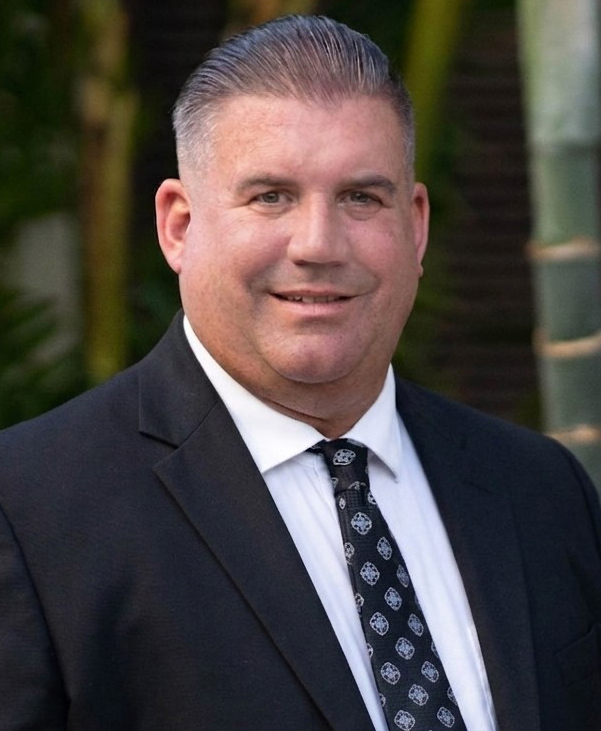
From Wall Street to the Shop Floor: Garrett Montrone, Western Sheet MetaL
The phone call came at the worst possible moment … or maybe the best. Garrett Montrone was in the middle of his annual performance review at Goldman Sachs, the kind of meeting where compensation gets set and futures get decided, when a separate conversation with college friends was pulling at him. They were launching a tech startup and wanted him in. He was weighing two versions of his future when his father threw a third one on the table.
“He said, ‘I think you would be a great fit at Western,” Montrone recalls. “I think you have the composure, the mental toughness and the capacity to do this, and it’s something that’s like a legacy.’”
At first, Montrone didn’t even register it as a real option. He had grown up around Western Sheet Metal, the Salt Lake City HVAC and mechanical contracting firm his grandfather founded in 1968, starting from scratch in a chicken coop on his alfalfa farm while his grandmother kept the books in the farmhouse living room. But the trade had never figured into his plans. He had gone to Utah State University for a degree in management information systems, worked at a cloud computing firm called the K2 Group, and landed at Goldman as a technology analyst. He was moving up. He was immersed in a world of live data, global finance and enterprise software that most people never see.
Then he thought about what the work actually required.
“I naturally do things that I like to do — I’m a problem solver. A firefighter, whatever you want to call it,” Montrone says. “I can come into any hectic environment with problems all over the place. And once I realized that’s what sheet metal contracting is all the time — it’s just being a problem solver — I could see that I would thrive there.”
He took the pay cut and came home.
The culture shock was immediate. “It was just a total night and day difference,” he says. “It was almost like a different century.” At Goldman, everything ran on live data, integrated systems and was synchronized across offices around the world. At Western, information lived in filing cabinets. Processes were localized on individual machines. When something broke, there was a dusty troubleshooting binder in a cabinet — one that hadn’t been opened in decades, with a support phone number for a company that had been out of business for years.
“The future is here. Technology is going to be a massive part of your business if you haven’t already taken advantage of it. In the next five years, it might be too late.” — Garrett Montrone
The first major win was cloud migration. At Goldman, cloud infrastructure was the baseline assumption — everything was accessible, always and from anywhere. At Western, nothing was. Montrone made it his mission to change that. “The first order of business was basically just let’s get our stuff into some sort of cloud situation,” he says. “Now we’re at a place where you could technically work from home and have everything you possibly could need.”
That transformation required trust. Coming in as the owner’s son — the third-generation heir in a company full of veterans who had watched other owner’s kids come and go — Montrone was working against assumptions he hadn’t made. “You have to work harder to earn trust, get to know everybody and be accepted,” he says. “They automatically assume you’re just the owner’s kid who has no business being there.”
Eight or nine years later, that trust has been earned. “Now we’re a solid team,” he says. “Everybody relies on me. They talk to me about personal things. We go out and do things outside of work.”
His message to the industry is urgent: technology adoption is not optional, and the window for proactive change is closing
“The future is here,” he says. “Technology is not just looking at a phone or a tablet. It’s going to be a massive part of your business if you haven’t already taken advantage of it. In the next five years, it might be too late.”
For Montrone, the legacy is everything. His grandfather, an Italian farmer’s son who couldn’t fully understand his own parents because they spoke Italian and he didn’t, built something from nothing. “He’s the perfect example of the American dream,” Montrone says. “And that’s something I value greatly. So, it’s not about money. It’s about the legacy.”
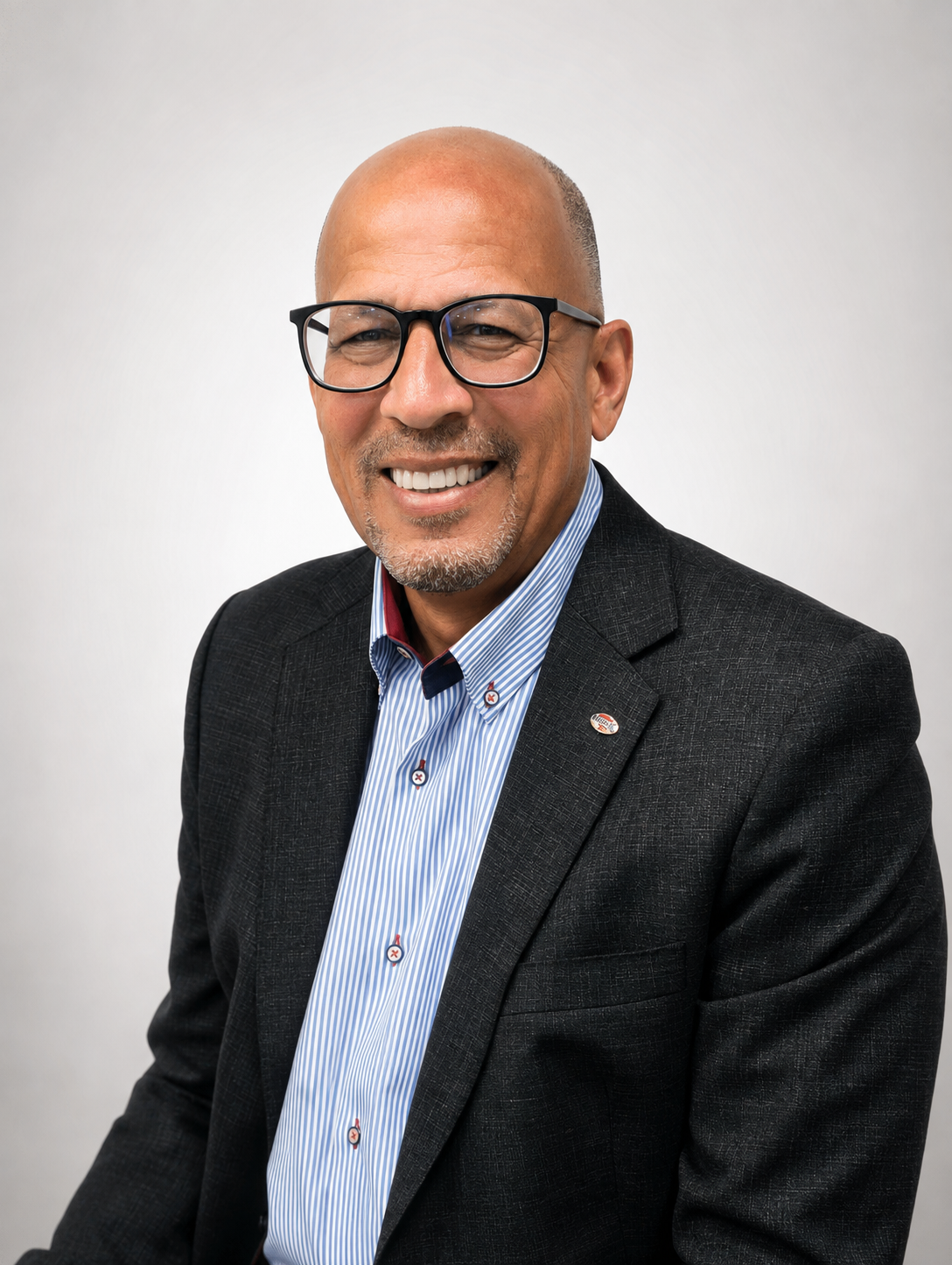
THE DATA MAN COMES HOME: ERNIE MENOLD, ERNEST D. MENOLD INC.
Before Ernie Menold became president of one of the Philadelphia region’s established sheet metal contracting firms, he was teaching English in Bangkok, managing SEO campaigns in Boston and watching a fintech startup grow from 150 employees to 400. He came to his family’s business not despite those detours, but because of them.
Menold grew up in the orbit of Ernest D. Menold Inc., a company now more than 70 years old that specializes in HVAC, dry-side sheet metal, pharmaceutical work and custom stainless architectural metals. He started painting fences and doing general maintenance at 14, worked the shop floor in college, got field experience hanging ductwork and shadowed project managers as a summer assistant. The exposure was deep, but the expectation was never automatic.
“The way our family operates as a family business is there isn’t a pressure mandate to come and work,” he says. “That decision needs to be an independent one — one that comes from a place of wanting to work there, not from a mandate.”
So, Menold left. He taught abroad for a year, came back, left again for Boston and built a career in digital marketing at a time when the discipline was still forming. He ran SEO and paid search campaigns for multiple clients at a marketing agency. He eventually landed as search engine marketing manager at Flywire, a financial technology platform, where he watched a mid-sized company build and scale a digital infrastructure from the inside.
“I got to see how a company scales digitally, building and implementing a tech stack very methodically,” he says. “That set a great foundation.”
When his father approached him in 2018, the company was growing, taking on bigger work and experiencing an expanding preconstruction workload. So, Menold came back as business development manager. The title suggested marketing and sales. The reality was process mapping and digital transformation. “It was a lot of operations — going through our processes, seeing how paper flows throughout a 70-year-old company and figuring out digital solutions to really get information into foremen’s and project managers’ hands quicker,” he says.
The skill that carried over most directly, Menold says, was data fluency. Years of turning raw analytics into client-ready stories had trained him to wrestle meaning from messy spreadsheets, find patterns in dirty CSV files and make data tell a story rather than simply report it. In construction, that same ability became the foundation for operational decision-making.
“I view it as: find those three dots and hit export on a messy CSV and play with that data,” he says. “That gave me the tools to find insights and actually make decisions for the company based on actual data rather than gut feelings.”
“Our work is tangible. Sheet metal is the one trade turning flat metal and metal stock into actual fabricated items that go and live somewhere for years to come. To actually be able to go and touch and see your installed work is easily the most gratifying part of it all.” — Ernie Menold
The challenge he encountered upon returning was experiential. Walking into scope meetings for large duct jobs, Menold was sometimes the least qualified person in the room to nail down the nitty-gritty of a bid. That knowledge — knowing where your risk sits, recognizing the position an owner or general contractor is trying to put you in and protecting profitability — takes time to build and can’t be imported from another industry.
“That is something you learn over time,” he says plainly.
What he could import was a fresh set of eyes. The company’s shop foreman was receiving work orders through a chaotic mix of text messages, emails and hand sketches. There was no standardized process and no centralized visibility into where jobs stood. Menold started there.
By 2020, he had built a workflow management layer on top of existing company software. In recent years, the firm has migrated to the Microsoft Power Platform, building custom solutions across its multiple lines of work after discovering that off-the-shelf construction management tools couldn’t accommodate their particular mix of pharmaceutical, architectural and HVAC work.
Now, foremen can pull up iPads and see where a job stands in the shop in real time without chasing down a phone call.
Menold sees his generation — the 40-somethings entering family businesses with digital backgrounds — as a pivot point for the industry. He sits on SMACNA’s construction technology committee and regularly encounters peers navigating the same transition.
For those considering the leap into the trades, Menold offers a distinctly tactile rationale. Coming from a software company, where success was measured in clicks, impressions and customer feedback loops, the physical reality of construction work hit differently.
“Our work is tangible,” he says. “Sheet metal specifically is the one trade turning flat metal and metal stock into actual fabricated items that go and live somewhere for years to come. To actually be able to go and touch and see your installed work is easily the most gratifying part of it all.”
THE SHAKESPEARE SCHOLAR WHO LEARNED TO WELD: DEVON MADON, MADON SHEET METAL
Devon Madon’s academic dissertation was on Shakespeare. She spent 15 years in classrooms, college lecture halls and at a prestigious math and science academy in Illinois, teaching literature, theory and close reading. Her husband, John, was an apprentice sheet metal worker becoming a journeyman, coming home with stories about what he built with his hands.
“I got my PhD in literature while he got his PhD in sheet metal,” she says with a laugh.
They were, by any conventional logic, on divergent tracks. Devon had deliberately fled family business after watching her father’s graphic design company — Wallace Church, a firm her grandfather had founded in the 1950s that did brand design for major clients including the Pillsbury Doughboy — sell rather than pass to the next generation. She had gone as far from entrepreneurship as she could get, all the way to a doctoral program, precisely because the experience of watching her father face that transition had been painful to witness. Even when his story turned out fine — he became happy, less stressed and wildly successful in other pursuits — the lesson Devon absorbed was about the weight of legacy.
So, when she and John decided in late 2019 to open Madon Sheet Metal, a specialty welding shop, she went in clear-eyed about the risks. They had two young boys, they were combining marriage and business, and they were opening their doors just before COVID hit.
“We had a really hard time for the first two years getting over that initial hump,” she says. “All kinds of bumps and turns and changed directions. But this is now our sixth year in business. We’re still here. And now we’re finally running a profitable shop and have found our niche.”
John brought the generational knowledge — his grandfather had come back from World War II with nothing, gone to Chicago and got a union sheet metal job. Both his father and uncle are sheet metal workers. His father’s guidance helped Devon and John understand the relationship between the shop, the office and the field in ways that no book could teach.
Devon brought everything else: the ability to plan, connect with people and 15 years of community-building experience.
“My job was being a teacher, and I think there are a lot of transferable skills,” she says. “My ability to connect with people and understand where their real pain points were is very similar to the kind of work I had to do as a teacher. Community building is basically what good teaching is, and that is a really transferable skill when it comes to small business ownership, especially in an industry that’s so much about relationships.”
The complementarity of their skill sets, Devon says, is the heart of what makes the partnership work. John can visualize a three-dimensional object in his head, understand the air pressure that has to flow through it, design it, weld it and put it together. Devon communicates through language with clients, contractors and the broader business ecosystem around the shop.
Working with her husband has required the same discipline she found in all the literature she’d read about family business, and she read a lot of it. She is, after all, a scholar. When things got hard, she went to the library. She talked to other people who had done it. She got financial, spiritual and mental health support, and she isn’t shy about saying so.
“I think that it’s really good to normalize getting some help,” she says. “It’s not like you’re done once. You have to keep renegotiating how to get back to that place where everybody can communicate and work together from a place of strength.”
She rejects the narrative that family business is a particular kind of trap or dream. It is, she says, whatever you make it, and it is sustained by the same things that sustain any relationship: respect, transparency, empathy and honesty about when you need help.
Her advice to anyone sitting on the fence about entering the sheet metal and HVAC world is know what specific problem you can solve.
“One of the huge misconceptions about this industry is that it’s only people who have one particular mindset or one skill set who can go into this,” she says. “This industry needs all kinds of minds and all kinds of different skill sets. But what is yours, and how can your particular skill set contribute?”
Montrone left Goldman Sachs and found himself running a plasma table. Menold left a fintech firm and found himself untangling 70 years of paper-based workflows. Madon left a university lectern and found herself co-running a specialty welding shop.
What they share is a disposition. They are people who recognized something in the sheet metal and HVAC industry that the industries they came from couldn’t offer: permanence and real work. The kind of legacy you can drive past and point to.
The labor shortage, data management challenge and technology gap is real. But so is the community. That inclusive culture, combined with the urgent need for new talent, new skills and new perspectives, makes the sheet metal and HVAC industry rare.
“This industry is wide-open,” Montrone says. “Get involved and get as much knowledge as you can.”
“One of the huge misconceptions about this industry is that it’s only people who have one particular mindset or one skill set who can go into this. This industry needs all kinds of minds and all kinds of different skill sets.” — Devon Madon
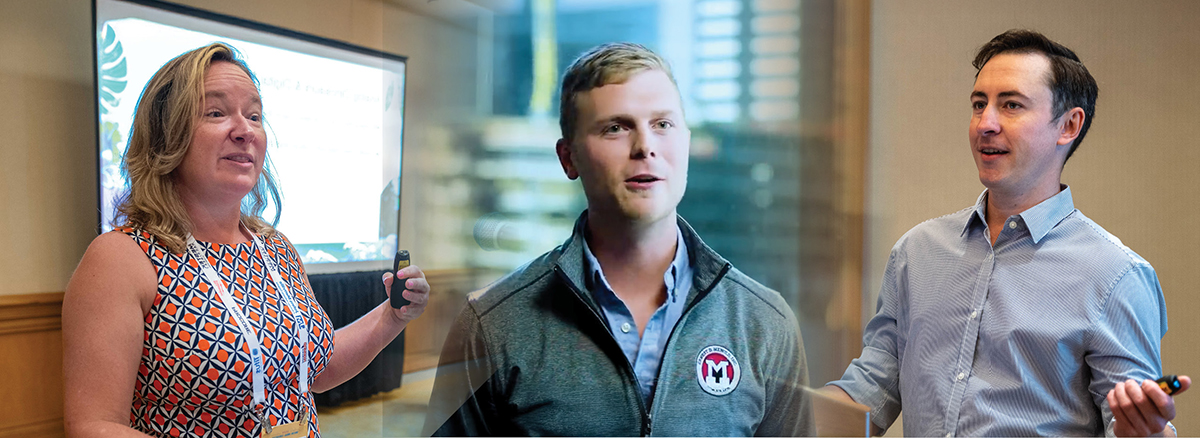
From left to right: Devon Madon, Ernie Menold and Garrett Montrone.