 This article focuses on automation, but AI can easily be substituted in as well. While concerns often resurface during election cycles, the reality is that automation has been part of our industry for decades. Rather than embracing it blindly or resisting it outright, it’s worth looking at how these tools may actually affect our workforce and our work.
The most common concern is job loss. This fear is valid and deserves to be addressed thoughtfully. Some roles do disappear when automation is introduced, but that does not automatically translate to net job loss. A frequently cited example is the introduction of ATMs in the 1970s. While many expected bank tellers to be replaced, banks ultimately hired more employees as automation reduced routine tasks and enabled expansion. The work ended up changing, often becoming more customer focused and meaningful.
A similar dynamic exists in construction. Equipment such as coil lines, plasma and laser tables, and multi-axis cutters can reduce labor on repetitive cutting tasks. But when viewed across the full workflow, one or two operators can feed multiple downstream workstations. Automation removes bottlenecks and allows more people to stay productive in higher-skill assembly, welding, and installation work.
Another concern is the loss of craft. In practice, the craft doesn’t disappear, it just shifts. Tradespeople still rely on deep knowledge to ensure machines produce accurate, high-quality parts. The most demanding skill often shows up later in the process, where workers assemble complex systems, adapt to changing jobsite conditions, and ensure components fit into a constantly evolving building.
Automation also enables contractors to take on more work. While labor hours may be reduced on individual assemblies or projects, improved speed and accuracy allow firms to bid competitively and increase overall capacity. With strong backlogs across much of the industry, efficiency gains often translate into more total work, not less.
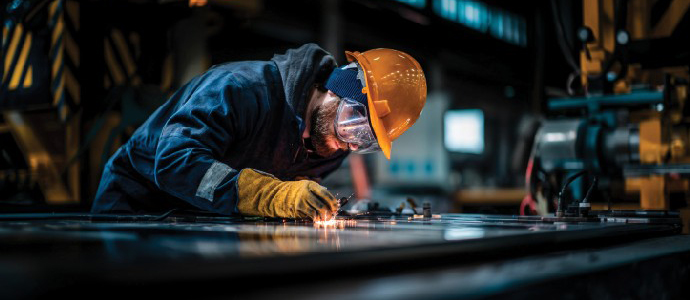
One of construction’s strengths is how these tools are developed and adopted. Many automation solutions are created in collaboration with contractors, unions, and shop workers, with a focus on improving safety and efficiency rather than replacing people. That collaboration has also created new roles in engineering, installation, and maintenance.
Automation isn’t going away. What matters is how we continue to adopt it thoughtfully, collaboratively, and with respect for the workforce that makes this industry run.